
Introduction — a quick question on the road
Have you ever stood in a hospital hallway and wondered how doctors can see blood flow without cutting open a patient?
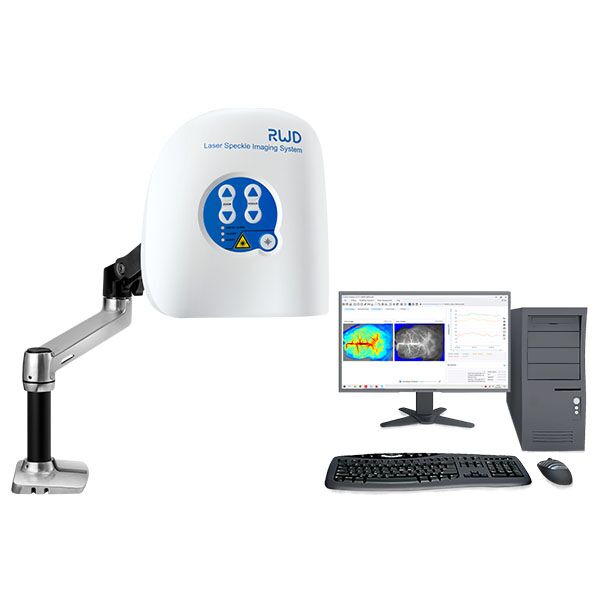
laser speckle contrast imaging lsci can show that flow in near real-time, using light patterns to map movement under the skin (simple optics, big payoff). I remember the first time I watched a speckle movie—tiny bright and dark grains shifting—and I thought, “That’s telling us a story.” Data shows LSCI can capture perfusion at video frame rates, and clinicians use it to spot changes in microcirculation quickly. So why do many teams still rely on slower or bulkier methods that miss short events? That is the puzzle I want to walk through next.
Where standard approaches fail: technical limits and user pain
laser speckle contrast imaging lsci system often exposes flaws in traditional tools—flaws I still see in labs and clinics. I’ll be blunt: many common setups trade speed for stability or vice versa. For example, Doppler probes give point measures but miss spatial patterns. Thermal cameras map heat, not flow. And some laser-based rigs are so sensitive they need a dark room and an entire support team. In practice that means missed events, longer exams, and frustrated users. Speckle contrast and frame rate constraints are at the heart of it—get those wrong and you get noisy maps, not answers.
What’s really breaking down?
Technically, speckle contrast depends on laser coherence, optical scattering, and detector sample rate. When a CCD camera is too slow or the frame rate is mismatched, the speckle blurs and the computed flowmetry values shift. I’ve seen calibration routines that feel like ritual—lots of fiddling, little reproducibility. Look, it’s simpler than you think: if your optics and processing don’t match the physiological scale you aim to measure, you’re collecting illusions. That creates hidden pain points—long setup time, inconsistent maps, higher false positives. We end up repeating scans. — funny how that works, right?
Future outlook: where LSCI can go next
I’ve been tracking innovations that pair smarter hardware with cleaner software. Modern systems push toward compact optical modules, edge computing for on-the-fly processing, and adaptive illumination that lowers speckle noise. A practical example is the way some teams integrate GPU-accelerated algorithms to de-noise speckle frames and produce reliable perfusion maps in seconds. When a laser speckle contrast imaging lsci system combines higher frame rate sensors with smart filtering, the difference is noticeable: fewer repeats, quicker decisions, and happier staff. I can say from experience that small hardware gains often unlock bigger workflow wins.
What’s Next?
Looking ahead, I expect two things to matter most: portability and interpretability. Portable rigs let clinicians image at the bedside. Better visualization tools let non-experts read maps without a PhD. We should also watch improvements in laser stability and algorithm transparency—those two quietly change adoption. — and yes, that requires honest validation studies and real-world pilots. If you ask me, the best way to judge a system is to test it on the cases you actually see every day, not on curated demos.
To help you evaluate options, here are three practical metrics I use when choosing systems: 1) effective spatial resolution under motion, 2) usable frame rate after processing (not just raw sensor rate), and 3) end-to-end time from capture to decision. Measure those and you’ll spot the real winners. I want to close by noting: we should demand tools that make clinical life easier, not tools that make clinicians adapt. For trusted solutions, consider learning more about the companies leading these improvements, including BPLabLine.
