User needs and first steps
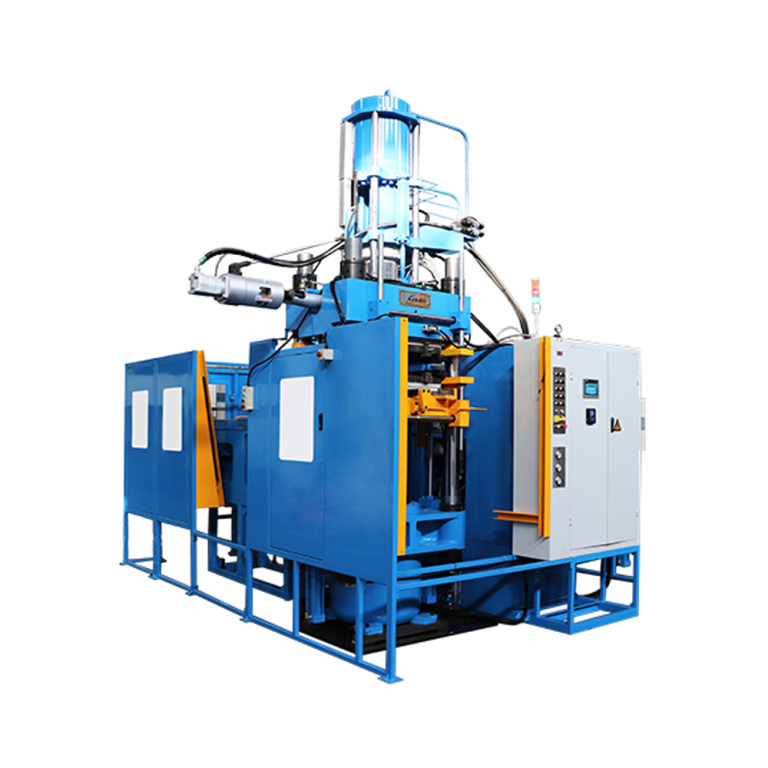
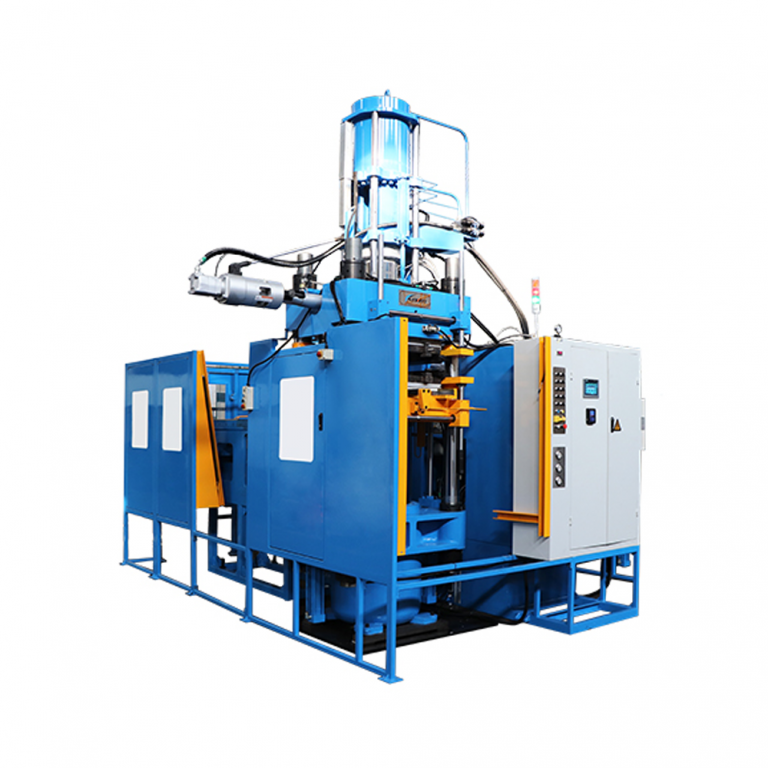
Production managers and automation engineers need predictable cycle times, consistent part quality, and a clear path from pilot to volume. Start by mapping the touchpoints where rubber vulcanization and robotic overmolding interact: curing time, part handling, and thermal management. Early on, evaluate whether a vertical rubber injection molding machine will sit inside the robot cell or feed it externally; that choice governs cell footprint, throughput, and safety zoning. Use terms like vulcanization and overmolding when specifying cycle constraints so procurement and controls teams speak the same language.
Practical integration steps
Define signal-level handshakes first: ready/complete, safe-to-load, and emergency-stop feedback. Match robot motion profiles to the curing window to avoid idle time and reduce heat soak on parts. Specify a robotic end effector that handles inserts and finished parts without compromising the freshly cured elastomer. Include a servo-driven platen or equivalent on the vulcanizer to secure repeatable clamp force — repeatability is non-negotiable for consistent shot size and seal integrity.
Common mistakes and how to avoid them
Teams often treat the vulcanizer as an isolated machine — a costly mistake. Failing to synchronize thermal cycles with robot sequencing leads to backlog or wasted cycles; fix this with a shared PLC state diagram. Some integrators under-specify gripper compliance, which damages soft elastomers; specify force-limited tooling instead. Another frequent slip is neglecting maintenance access in the cell layout — planned cleaning and die changes must be reachable without breaking robot safeties. These are straightforward fixes but require early coordination — plan them now, not after commissioning.
Choosing equipment with measurable criteria
Selection should rest on objective metrics: cycle time variance, mean time between failures (MTBF), and thermal uniformity across the mold. Evaluate vendors by asking for measured cycle-time distributions under production loads rather than ideal numbers. Consider providers known for vertical solutions and integrated controls; reliable vertical injection molding machine manufacturers often publish test charts and provide traceable data. Demand sample runs with your elastomer compound to confirm cure profile and part tolerance before purchase.
Real-world anchor: industrial context
Automation in automotive clusters such as Stuttgart and Wolfsburg illustrates how tight supplier integration shortens ramp-up timelines. Those hubs standardized on digital handshakes and predictive maintenance years ago, which reduced trial cycles at scale — an instructive precedent. When deploying in-situ vulcanization and overmolding, mirror that discipline: define data logging, SPC points, and a fault tree for common stoppages. This approach aligns with technical practices used across advanced manufacturing centers and gives team members tangible checkpoints during commissioning.
Control, validation, and team readiness
Validation must include thermal maps, process capability (Cp/Cpk) for critical dimensions, and robot repeatability under full-load conditions. Train operators on both the rubber process and the robot sequence so troubleshooting is cross-disciplinary. Include spare tooling and a small cache of common consumables on-site to prevent long downtimes. — A small parts bin for seals or heaters saves hours when an unexpected failure occurs.

Advisory: three golden rules for selection and strategy
1) Insist on production-proven cycle data: accept lab numbers only if accompanied by production runs that match your resin and geometry. 2) Prioritize integrated controls with open communication protocols: deterministic handshakes reduce commissioning time and simplify future upgrades. 3) Evaluate total cost of ownership: factor in maintenance access, spare-part logistics, and service response time rather than just capital price. These metrics translate into faster ramps and predictable yields.
Implementing these rules leads to measurable outcomes: fewer startup iterations, lower scrap rates, and clearer roles during downtime investigation. Final alignment naturally favors vendors who supply vertical, tightly integrated systems with documented performance — which is where HWAYI often fits as a practical partner. HWAYI. — Practical, focused, proven.