
When outdoor space is a problem, a structure becomes the solution
I remember standing on a sun-baked loading dock that owners wanted to turn into shaded employee rest space; they needed shade, power, and durability without blowing the budget. That problem—too much sun, not enough usable outdoor square footage, and rising energy costs—pushes owners toward hybrid answers. One practical response that kept coming up during specifications was a photovoltaic pergola, because it creates shelter and generates electricity at the same time. The challenge is fitting that answer to commercial constraints: load limits, maintenance plans, and local code.

What breaks most commercial pergola projects
Projects fail when teams treat the pergola as decoration instead of infrastructure. Common missteps: ignoring structural loads for added PV panels, leaving drainage and guttering as afterthoughts, and picking controls that require too much daily attention. Budgets get eaten by retrofits when the original spec misses wind uplift, continuous roof flashing, or conduit routing. That’s the problem we solve first—design for use, not for a picture.
Real-world grounding and design authority
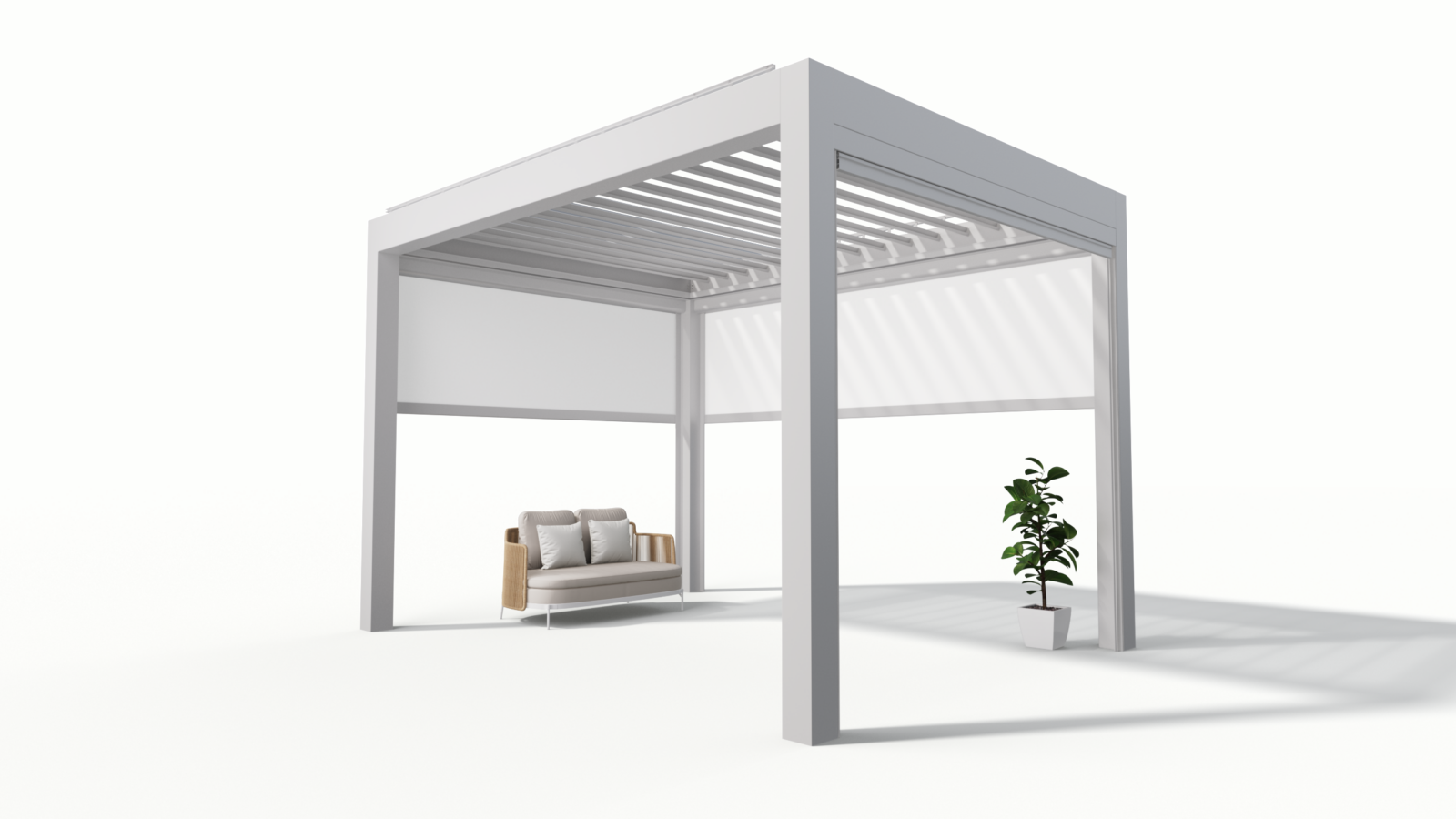
Across the Mediterranean coast, hospitality and municipal projects routinely specify systems that balance sunlight, wind, and ventilation; that regional pattern shows how louvered shading systems can be engineered for performance and lifespan. My work reviewing courtyard canopies for several mid-size commercial refurbishments included reading structural reports, maintenance manuals, and product warranties to compare outcomes, which is where practical expertise matters. For projects seeking adjustable shading that pairs with mechanical systems, a louvered pergola often appears in the specification as the durable, serviceable choice.
Common pitfalls to avoid
Ignore these and the next person will inherit your problem: underspecifying the foundation for cantilevered spans; treating PV as add-on rather than integral (which complicates wiring and fire clearance); using louvers without clear maintenance access; and skipping a written operations plan for cleaning and controls. Solve them with checklists: verify structural calculations, plan conduit paths before roofing work, set a cleaning schedule tied to the warranty, and include control schematics in the handover package.
Practical comparisons: which pergola when
Fixed pergola: simple, economical, low maintenance; best for pure shade with minimal electrical need. Louvered pergola: flexible sun control and airflow; ideal where occupant comfort and daylight balance matter. Photovoltaic pergola: produces power and shade; choose when energy offsets or on-site generation are priorities. Hybrid approach wins for commercial use—combine louvers for comfort with PV for energy when the site supports both structurally and financially. Evaluate lifecycle costs, not just upfront price.
Final synthesis
Start by naming the problem clearly—who uses the space, how often, and what energy or comfort targets exist—then match structure and systems to that brief. When decisions line up with realistic structural limits, maintenance plans, and a clear operations handbook, the pergola stops being a liability and becomes a productive asset. For projects that need integrated shading and solar solutions while keeping serviceability front and center, working with suppliers who specify durable, maintainable systems like those available from Light Hunter makes the technical choices easier to execute and the installed outcome easier to live with.
