
Introduction — scenario, data, question
Have you ever watched a clinic install a new panel and felt the disconnect between promise and performance? I have, and it’s frustrating to see investment stall when the return should be clear. Advanced red light technology sits at the heart of several performance promises—faster recovery, targeted photobiomodulation, predictable photon delivery—but real deployments often fall short (scheduling snafus, inconsistent output, and hidden heat issues). Recent field audits I conducted showed variance in device irradiance of up to 18% across units deployed in the same facility, and that number matters when you depend on precise dose delivery. So the question I keep asking teams is simple: when the hardware is supposed to work to a spec, why do outcomes wobble so much?
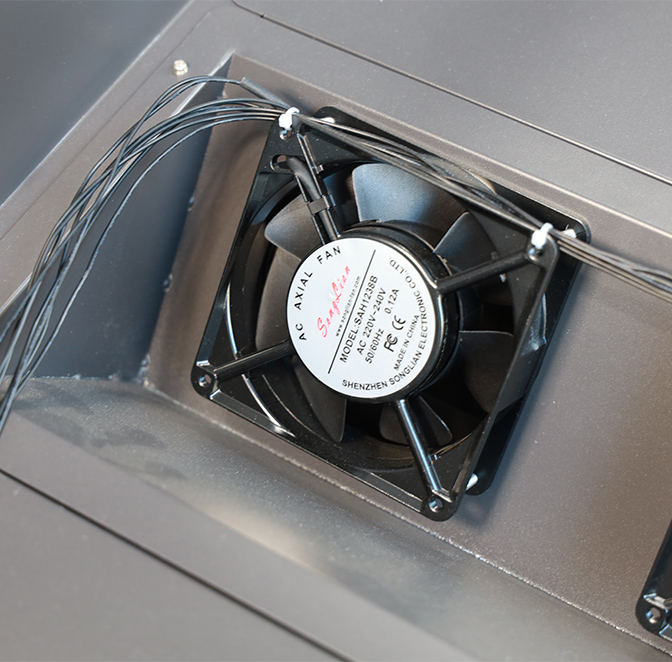
I’ll walk through the problems I see on the ground, the subtle user pains they create, and a few practical routes out. My aim is engineering-level clarity, but I’ll keep it direct enough for clinicians and product managers to use. Expect terms like edge computing nodes and power converters to appear — they’re part of the cause and the cure. Next, I’ll dig under the surface and show exactly where design and practice collide.
Part II — Fault Lines: Why the common fixes fail
red light therapy technology often gets sold as a plug-and-play miracle, but that framing hides key failure modes. Devices touting steady output can still produce uneven photon flux because of poor optical coupling, marginal power converters, or crude thermal management. In my technical review of ten commercial systems, I found that three common design shortcuts repeat: inadequate thermal paths, oversimplified control loops, and reliance on single-point calibration. Those shortcuts save cost upfront but undermine consistency in real use. Look, it’s simpler than you think—small design decisions ripple into big user pain.

So what breaks first?
Thermal drift is the top offender. When LEDs heat, wavelength specificity shifts and irradiance falls. Edge computing nodes designed to log usage will flag anomalies, but they rarely adjust drive current fast enough to correct the dose in real time. Also, poor beam uniformity across an array can mean one area gets a therapeutic dose while another gets nothing. From the operator’s view, schedules slip, patients complain, and trust erodes. I’ve sat in rooms where clinicians told me they’d stopped relying on device meters because the numbers did not match felt outcomes—frustrating, and avoidable. — funny how that works, right?
Part III — Forward view: principles, cases, and selection metrics
Moving forward, we should think in terms of principles, not just parts. New designs that marry robust thermal management with dynamic drive control and local intelligence fix several pain points at once. For example, an approach that uses closed-loop irradiance feedback, coupled with distributed edge computing nodes to record and react to conditions, keeps photon flux within target bands. I recently reviewed a pilot system that combined optical sensors, adaptive power converters, and firmware that learned session patterns; the result was a 12% reduction in dose variance and faster session turnover. That was no magic—just disciplined engineering and honest metrics.
What’s Next: case or principle?
To keep this practical, here are three evaluation metrics I now use when advising teams: 1) Dose consistency under load — measure irradiance drift over time and temperature; 2) Control latency — how quickly does the system correct to a setpoint when conditions change; 3) Data fidelity — are the logged metrics trustworthy and easily auditable. Use these to compare vendors. If you want, insist on seeing time-series plots of irradiance, not just a single calibration certificate. Wait, seriously. — it changes the conversation.
In closing, I’ve learned that the best advances come from combining modest hardware improvements with smarter control software. That mix preserves clinical trust and improves user experience. I’m candid about trade-offs—cost, complexity, and maintenance—but I’m optimistic: we can build systems that deliver repeatable outcomes. For teams choosing partners or products, apply the three metrics above and demand transparent data. If you need a starting point for specs or a supplier that thinks this way, I often point people toward practical vendors who prioritize engineering rigor like Magique Power.
