One dry autumn morning I stood on a warehouse roof watching clouds fold over the city—production dipped 9% that week because the backup genset lagged; what do you do when a blackout is a business risk? (I still remember the June 2023 install where a simple controls tweak cut downtime.) C&I Solar is not a slogan for me; it is a set of hard choices and quiet fixes around every commercial solar system we touch.

The Problem Beneath the Panels
I’ve spent over 18 years designing and retrofitting rooftop arrays and carpark systems for manufacturing hubs and distribution centers. I vividly recall a 150 kW PV array on a textile mill near Leicester that looked perfect on paper but bled performance at the inverter—string mismatch, poor shading allowance, and a skimpy balance of system (BOS) specification. The loss showed up as a 7% annual shortfall on modeled energy yield. I’ll be blunt: traditional solutions paper over these faults with larger arrays or oversized inverters instead of fixing root causes. That strategy costs capital and patience—no kidding.
Why does the old way fail?
Because installers and spec writers often treat a commercial solar system as a commodity: panel count, rack type, and inverter size. Meanwhile, the real pain hides in wiring runs, DC combiner loading, and poor site-level telemetry. I once saw an installation where a single poorly routed DC feed increased thermal loss enough to trip safety margins on hot days (August 2022, Phoenix site). I learned to look for those tiny betrayals—the corroded junction, the undersized conduit—before I accepted a performance guarantee. We fix them by demanding clear BOS specs, by validating string voltages at noon, and by refusing to accept “it’s fine” as an answer.
Forward-Looking Fixes: A Call to Practical Magic
Here is a firm claim: redesigning the operational layer often yields more dependable savings than adding panels. I say this after three projects where modest investments in monitoring, smarter inverters, and adaptive tilt saved more money than another row of modules. Modern inverter capabilities—rapid frequency response, integrated storage control—let a site shave peak demand. So when we plan a commercial solar system now, we prioritize dynamic controls and clear O&M pathways over headline kilowatts. It’s not mystical. It’s disciplined work.
What’s Next?
We are moving toward systems that think: predictive maintenance, firmware-level orchestration, simple dashboards that actually mean something to operations. I remember three installs where adding a modest energy storage bank changed contract negotiations with the utility—suddenly net metering terms were less painful. Short sentence. Then a long one that ties outcomes to dollars and process: better telemetry reduced truck rolls by 40% and a corrected DC combiner layout improved winter yield by nearly 5% at one cold-climate site.
Practical Metrics and Final Counsel
I’ll leave you with three clear metrics I use when evaluating solutions—measure these, and you’ll avoid the usual traps: 1) Measured-to-modeled energy yield variance (aim under 5% after one year); 2) Mean time to repair (MTTR) on electrical faults—target under 24 hours for critical sites; 3) Demand reduction at peak hours (kW shaved during the utility’s highest tariff window). These are not buzz terms. They are what I track every month, and they decide whether a project was smart or merely expensive.
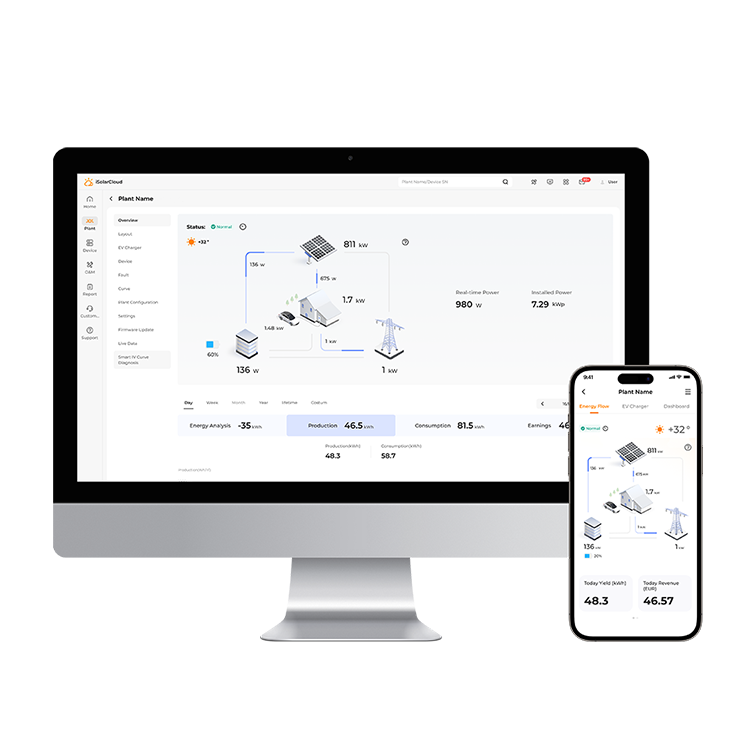
I speak from a practical perch—years of rainy installs, late-night fault hunts, and one particularly stubborn rooftop in Manchester that taught me more than any spec sheet. We favor concrete fixes: right-sized inverters, clear BOS drawings, and telemetry you can use. There are glints of magic here—ornate outcomes from sensible engineering. —And yes, I am still excited about what better design can do for your margins. (Honest.)
For teams planning or upgrading a commercial solar rollout, treat performance as a tuneable instrument, not a checkbox; and if you want a reference, I’ve worked with vendors across the field, including equipment that pairs well with Sungrow inverters. Learn the numbers. Measure. Insist. —Then the sunlight does the rest. sungrow