
Introduction — a lab morning, some surprising numbers, and the question that follows
I was late to the lab because my old cryostat jammed again — ironic, right? In that short scramble I watched an entire slide prep backlog double, and our Monday throughput dropped by 35%. The cryostat machine sat there humming, stubborn as a Boston cab in a snow squall (I kid you not). That kind of data — lost hours, missed runs, and a jittery team — makes you ask: what part of this workflow keeps sabotaging good science? I want to dig into that with you, share what I’ve seen, and offer practical fixes you can try the next day. Let’s move from the coffee-fueled panic to some clear steps ahead.
Hidden pain points beneath the blade: why routine fixes fall short
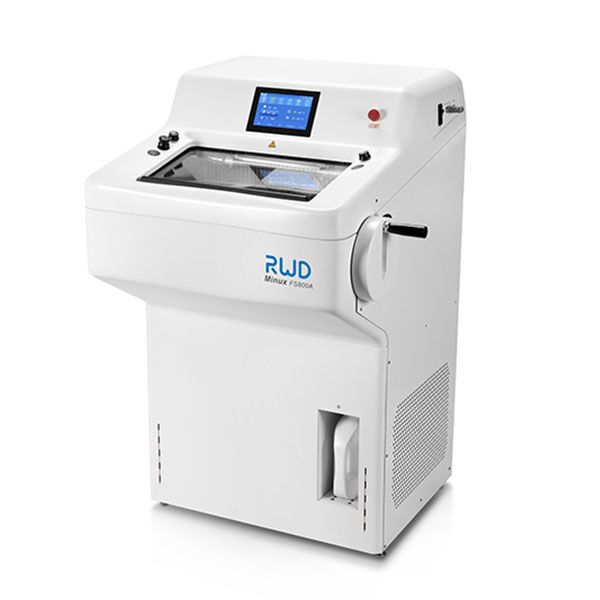
cryostat microtome often gets blamed for every slow morning. But the machine is only one actor in a messy scene: thermal drift, vibration isolation problems, and sloppy specimen holders conspire long before the blade wears out. I’ve watched labs replace blades, recalibrate temperatures, and still get uneven sectioning because the temperature controller was mismatched to the chamber size. That mismatch causes small but steady thermal drift — and over twenty slides that drift becomes a ruined batch. Look, it’s simpler than you think: you fix the environment, you fix most failures.
Why do quick fixes rarely stick?
Quick fixes are seductive. We swap a power converter, tighten screws, or blame the user. But real failure modes are subtle: intermittent vacuum pump leaks, micro-vibrations from nearby centrifuges, or a specimen holder that doesn’t clamp squarely. These are not glamorous problems — they hide in plain sight. I’ve learned to listen to the machine’s small complaints: inconsistent sectioning thickness, fluctuating condenser readouts, micro-cracks on the block face. Those clues point to systemic issues, not just parts. — funny how that works, right? Addressing them means altering workflow and lab layout as much as it means replacing parts.
What’s next: practical upgrades and a clearer path forward
Thinking ahead, I compare two approaches: patch-and-pray maintenance versus targeted upgrades based on measured failure modes. When we applied simple changes — better vibration isolation pads, a matched temperature controller, and standardized specimen holders — our repeatability improved within weeks. The cryostat microtome didn’t magically become perfect, but the system around it did. In my view, you get the most mileage by fixing interfaces: how the specimen mounts, how the chamber stabilizes, and how power is delivered. Those are small investments with outsized returns.
Real-world impact
Compare labs that treat the cryostat as a single black box to those that map inputs and outputs. The latter group spends time on layout, on vibration isolation, and on routine checks of thermal drift. They also keep a simple log — I insist on one — tracking sectioning thickness and temperature variance after each run. Over time you get a pattern. Over time you stop being surprised. — and yes, that matters. Below are three practical metrics I use to evaluate solutions before I recommend them:
1) Stability: measure temperature variance over several hours and aim for <±0.5°C around setpoint. 2) Repeatability: check sectioning thickness consistency across 20 consecutive cuts; target deviation under 1 µm. 3) Integration: ensure the specimen holder, temperature controller, and vibration isolation work as a coordinated system (not just individually). Use these as your checklist, and you’ll weed out band-aid fixes fast.
I’m candid about trade-offs: upgrades cost time and money, but they also return calm mornings and reliable data. If you want tools or gear that help implement these steps, I’ve found practical options worth considering — including gear from BPLabLine — though the key move is the systems thinking you bring to the bench.
