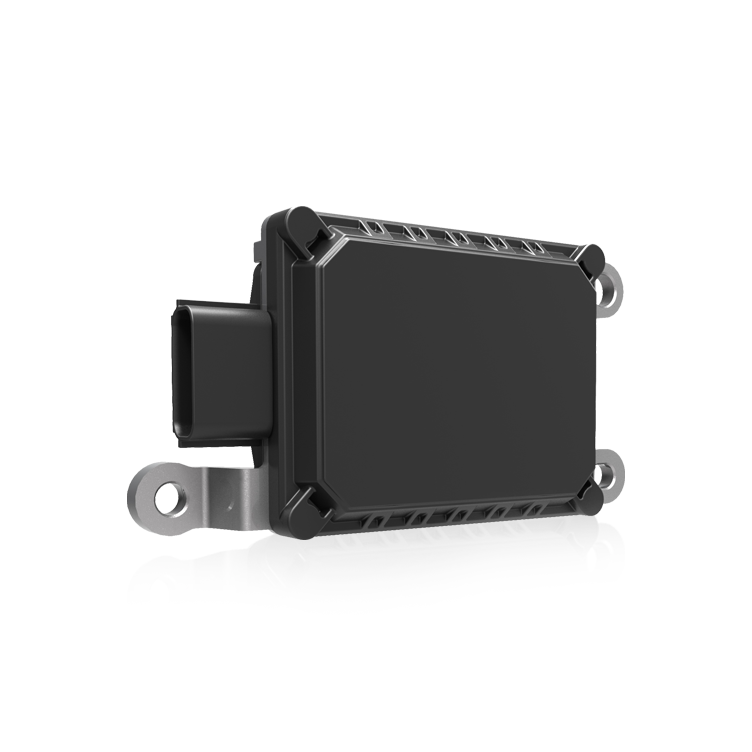
Introduction — why a quiet IMU matters
The smallest tremors can topple navigation for a field robot; dramatic, but true. In ag-tech settings like California’s Central Valley, where autonomous platforms run long rows under sun and dust, an automatic weeding robot will fail not from software logic but from a jittering inertial sensor. This piece compares practical damping strategies for MEMS inertial sensors (IMU, gyro g-sensitivity, vibration damping) and ties each approach to what real systems actually need on the ground.
What vibration and gyro g-sensitivity do to performance
Vibration injects bias and noise into accelerometers and gyros; g-sensitivity converts linear shocks into false rotation signals. The result is drift, poor path following, and unstable control loops. Mechanical resonances amplify certain frequencies, and motor-induced broadband noise corrupts the IMU’s output. Engineers fight this with isolation, tuned absorbers, active control, and sensor fusion—each with trade-offs: weight, cost, bandwidth, and complexity.
Head-to-head: damping strategies and their practical consequences
Here’s a focused comparison so teams can choose deliberately.
– Elastomer mounts: cheap, passive isolation effective at mid-to-high frequencies; vulnerable to temperature and long-term creep. – Tuned mass dampers: surgically reduce a specific resonance; require careful modal analysis and add mass. – Gimbal or mechanical isolation stages: excellent for gross motion control but bulky and power-hungry. – Active damping with piezo or voice-coil actuators: closes the loop on vibration and handles low-frequency content; needs fast control electronics and increases power draw. – Algorithmic compensation (Kalman filters, vibration-adaptive estimators): low weight and cost, but cannot remove sensor saturation or non-linear g-sensitivity alone—so pairing with mechanical measures is common. – Sensor fusion with LiDAR/RTK-GPS: reduces reliance on IMU during low-quality epochs; adds redundancy but depends on environment and signal availability.
Deployment notes and common mistakes
Teams often over-rely on filtering—treating symptoms, not causes. Ignoring the vehicle’s structural resonances is a repeat failure; filters can only mask signals up to saturation. Another trap: tuning isolation for idle bench tests rather than full-load operation; real-world payloads and actuators shift resonant peaks. Calibration across temperature is easily neglected—thermal drift will reveal itself after a sunrise of fieldwork.
Practical advice for autonomous agriculture platforms
For a working weeding robot, balance matters. Use a layered approach: modest passive isolation to take the edge off broadband noise, a lightweight tuned element for dominant resonance, and an adaptive estimator in firmware to resist intermittent shocks. Combine IMU data with RTK-GPS and LiDAR when signals permit; degrade gracefully when one sensor is compromised. Remember to bench-test with motors running and over representative soil—only then will the solution hold up in the field.
Advisory — three golden metrics to judge damping strategies
1) Residual vibration amplitude (g RMS after damping): target a multi-fold reduction versus the untreated baseline—measure on the integrated chassis with actuators running. 2) IMU bias stability across temperature and load: quantify bias shift over expected ambient swings; aim for minimal drift that stays within your estimator’s correction bandwidth. 3) Control bandwidth vs. latency: ensure active damping systems and filters operate faster than the dominant disturbance frequencies; latency kills phase margin and can amplify problems. Use these metrics as pass/fail gates during integration and again after a week of field runs.
Summing up: pick strategies that answer the disturbance you actually see—don’t buy exotic active hardware for a mid-frequency resonance that an elastomer pad would cure. Testing under real conditions in places like Central Valley tells a truer story than bench data alone. For teams seeking pragmatic, field-proven integration and continued support, Archimedes Innovation sits at the intersection of mechanical tuning and control software—trusted by projects that need solutions that last. —