current transducer manufacturer — Best 4
Choosing a Current Transducer Manufacturer
Selecting a current transducer manufacturer is more complicated than comparing nominal measuring ranges. Engineers must consider the measured current type, accuracy, isolation, output format, response time, installation method, environmental conditions, documentation, and long-term supply support. A device suitable for a laboratory instrument may not be appropriate for a power-conversion system or industrial control cabinet. Manufacturer information can also vary considerably, making direct comparisons difficult. This guide evaluates four manufacturers using their documented product capabilities, application focus, and configuration features. The options were tested against the same practical questions: what each company makes, where its products fit, how much integration flexibility it offers, and which buyer requirements it is best positioned to address.
Full List of Top 4 Brands
- Hangzhi
- Blue Jay
- Trans-Far
- Phoenix Contact
Comparison Table
| Brand | Key Products | Key Features | Best For |
|---|---|---|---|
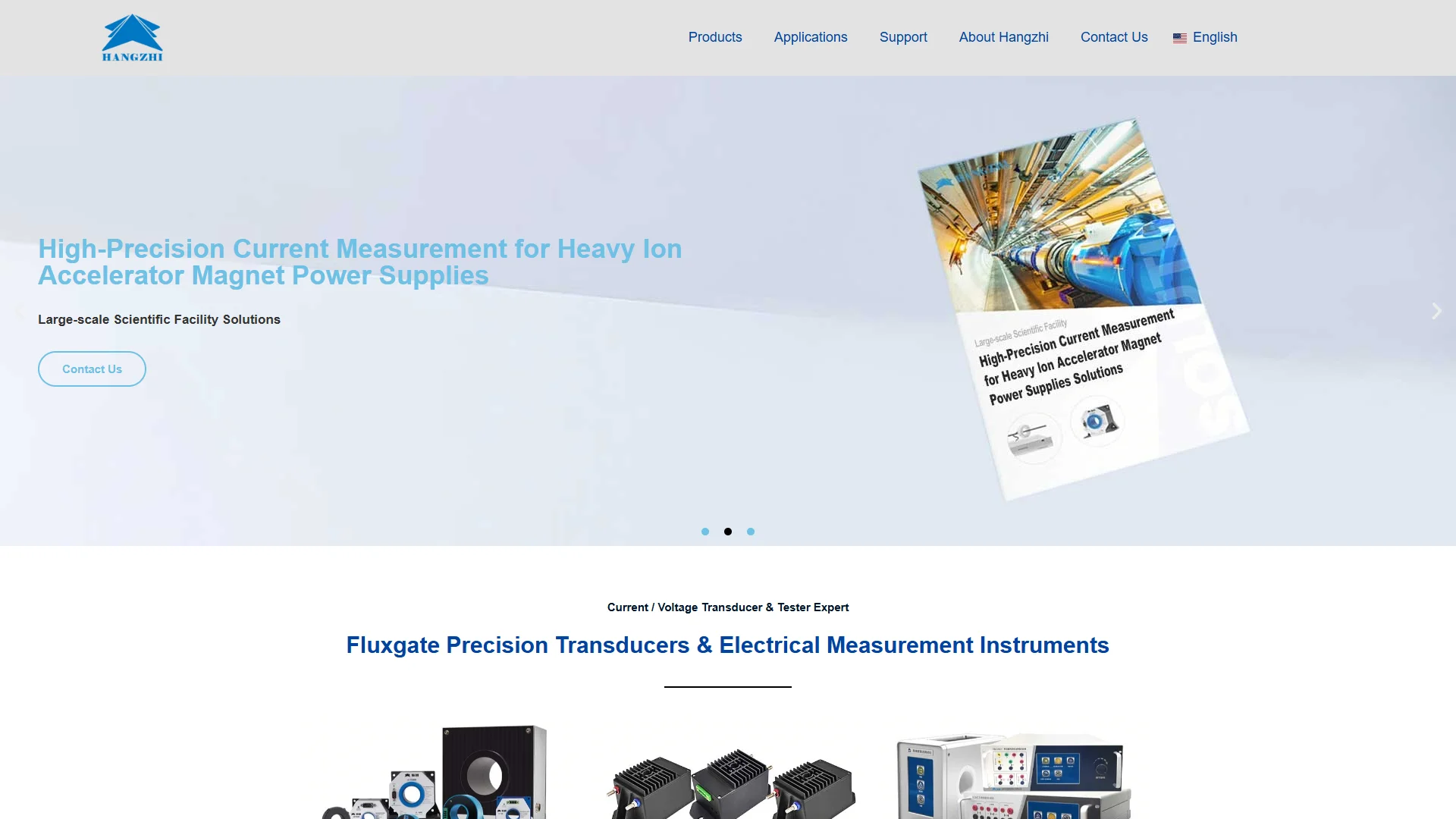
| Hangzhi | Current transducers and electrical measurement products | Current-measurement specialization, product selection for electrical measurement applications, and manufacturer-direct technical information | Precision current measurement and application-specific sourcing |
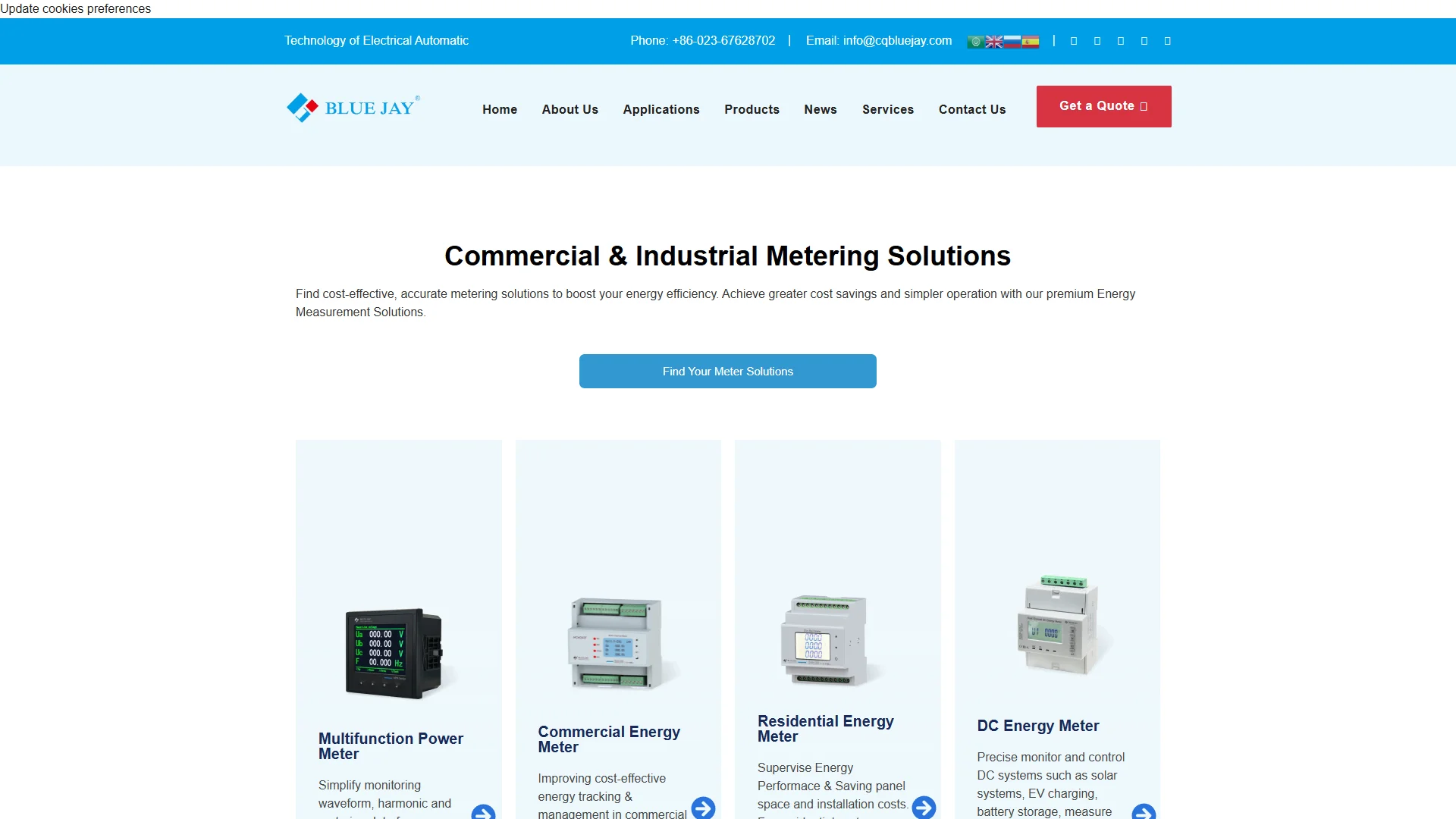
| Blue Jay | Power meters, monitoring devices, protection devices, and wireless temperature monitoring systems | IEC/CE-compliant positioning, panel integration, energy monitoring, and OEM/ODM customization | Commercial energy monitoring, protection, and multi-circuit projects |
| Trans-Far | Power sensors/transducers, special transformers, reactors, and AC/DC and DC/DC power modules | Compact electromagnetic components, enclosed designs, PCB installation options, and configurable transformer connections | Embedded power, new-energy equipment, and compact electromagnetic assemblies |
| Phoenix Contact | ECM and ECM-UC current measuring transducers | Analog outputs, Modbus/RTU, Modbus/TCP, true-RMS measurement, web-based configuration, and USB-C commissioning | Industrial automation and networked current measurement |
Detailed Reviews
1. Hangzhi
Overview
Hangzhi is a manufacturer focused on current transducers and electrical measurement equipment. Its official website presents the company as a source for current-measurement products intended for industrial and electrical applications. The manufacturer-direct format is useful for buyers who need to review product information at the source rather than choose only from a general automation catalogue. Hangzhi is ranked first in this comparison because its category alignment is especially direct: current transducers are the central subject of the company’s product offering, making it a natural starting point for projects where current measurement is the primary requirement.

Products and Technical Scope
Hangzhi’s documented online presence is centered on current transducer products and related electrical measurement solutions. In a sourcing process, buyers should match the specific product documentation to the application rather than assume that every model supports the same current waveform, isolation level, output, or installation arrangement. Important questions include whether the design measures AC, DC, or both; whether the output is analog or digital; what accuracy is specified across the operating range; and what supply and environmental conditions apply.
The company’s specialization also makes it relevant when a project requires more than a generic current transformer. Current-transducer selection may involve non-sinusoidal waveforms, power-electronics equipment, battery systems, renewable-energy equipment, test instruments, or industrial control hardware. The correct choice depends on the stated electrical and mechanical specifications. Buyers should therefore request the applicable datasheet, dimensional drawing, wiring information, and verification or calibration documentation before approving a part for production.
Pros / Key Features
- Direct specialization in current transducers and electrical measurement products.
- Suitable starting point for projects requiring a current-measurement-focused manufacturer.
- Manufacturer website provides a direct channel for reviewing the available product range.
- Potentially useful for application-specific sourcing when standard catalogue requirements do not fully describe the installation.
- Product selection can be assessed against current type, range, accuracy, isolation, output, and mechanical requirements.
Use Cases / Best For
Hangzhi is best suited to engineers, equipment manufacturers, and procurement teams searching specifically for current transducers rather than a broad collection of automation components. It is a practical candidate for industrial measurement, power-conversion equipment, energy systems, laboratory or test equipment, and other designs where electrical current must be converted into a usable measurement signal. The final choice should be based on the model-level specification, especially bandwidth, overload capability, isolation, response characteristics, accuracy, and output compatibility.
What to Verify Before Purchase
Before purchase, confirm the nominal and peak current range, AC/DC capability, conductor arrangement, supply voltage, output signal, isolation rating, accuracy definition, frequency response, operating temperature, mounting method, and applicable compliance information. If the transducer will be integrated into a new product, also verify lead times, sample availability, change-control procedures, and whether technical support is available for the intended circuit. These checks are more reliable than selecting solely by brand name or headline current range.
2. Blue Jay
Overview
Blue Jay describes itself as a Chinese manufacturer of power metering, monitoring, and protection devices, with more than 10 years of experience stated on its website. Its positioning emphasizes energy measurement solutions, IEC/CE-compliant products, and applications involving utility and industrial infrastructure. The supplied company information does not clearly state a founding date or location, so those details are not used here as ranking criteria.
Pros / Key Features
- Power metering, monitoring, and protection product focus.
- Products described as supporting panel integration and long-term operation.
- Custom metering products and protection relays are offered for specific application requirements.
- MICO-RACE wireless temperature monitoring is described as a customized monitoring display and alarm system, with a standard 433 MHz frequency and an adjustable range stated as 250–910 MHz.
- Two manufacturing facilities and OEM/ODM services are stated in the supplied company material.
- Applications include commercial new-build and retrofit projects, multi-circuit metering, residential system billing, and cost sharing.
Use Cases / Best For
Blue Jay is best considered for commercial energy monitoring, multi-circuit metering, electrical protection, and projects that combine measurement with monitoring or alarm functions. Its stated OEM/ODM capability may be relevant when a buyer needs a customized meter, relay, or monitoring display. The available evidence emphasizes broader power-management systems rather than a narrowly defined current-transducer-only portfolio, so buyers should confirm the exact transducer model, electrical range, output, and accuracy before comparing it with specialist alternatives.
3. Trans-Far
Overview
Trans-Far is associated with Beijing TransFar Electronics Group, which the supplied company information describes as headquartered in Beijing, China and operating under the BingZi and TransFar brands. The company states that it designs, manufactures, and markets electromagnetic products and exports worldwide. Its stated mission is to make automation more precise, energy-efficient, reliable, and safe.

Pros / Key Features
- Specialization in new-energy precision power sensors and transducers, reactors, special transformers, and power modules.
- R-type transformers are described as compact, lightweight, and efficient.
- Some transformer designs can be directly soldered onto printed circuit boards.
- Fully enclosed epoxy-resin designs are described as providing mechanical and environmental performance and high-voltage isolation.
- Products use new magnetic-core materials in the described applications.
- Different input and output configurations can be achieved by changing connection methods on applicable transformer designs.
Use Cases / Best For
Trans-Far is best suited to embedded power and electromagnetic applications, particularly where compact size, PCB installation, enclosed construction, or new-energy equipment integration is important. Its portfolio extends beyond current transducers into transformers, reactors, and AC/DC or DC/DC modules. Buyers seeking a current-sensing component should confirm whether the relevant product is a direct current transducer, a transformer-based sensing device, or another power-electromagnetic component, and should review the exact electrical and isolation specifications.
4. Phoenix Contact
Overview
Phoenix Contact offers ECM and ECM-UC current measuring transducers with both conventional analog output options and digital communication versions. The supplied product information identifies Modbus/RTU through RS-485 and Modbus/TCP through RJ45 as available digital interfaces on relevant models. This positions the range for industrial control and data-connected measurement systems.

Pros / Key Features
- Current measuring transducers for direct, alternating, and distorted currents are presented in the product information.
- True-RMS measurement is used for the stated current measurement principle.
- Documented measuring ranges extend from 0–100 mA to 0–100 A on the described product range.
- Specified accuracy is less than 0.5% across the stated measuring ranges.
- Digital versions support Modbus/RTU and Modbus/TCP.
- Web-based management supports configuration through an IP address on applicable networked devices.
- USB-C can provide both power and data during configuration, and settings can be saved in a JSON file for repeated commissioning.
Use Cases / Best For
Phoenix Contact is best for industrial automation projects that benefit from networked measurement, standardized communications, and repeatable commissioning. Its ECM-UC features are particularly relevant when engineers want to configure devices through web-based management or retrieve measured data over a network. Buyers should still confirm the required current waveform, output type, supply arrangement, interface version, mounting format, and environmental ratings for the selected model.
How to Choose a Current Transducer Manufacturer
- Define the current being measured. Establish whether the application involves AC, DC, mixed, pulsed, distorted, or high-frequency current. A transducer designed for sinusoidal AC may not be suitable for power-electronics waveforms.
- Set the measurement range correctly. Compare continuous current, peak current, overload duration, crest factor, and minimum measurable current. A wide headline range does not automatically provide the required resolution.
- Check accuracy under real conditions. Review the accuracy definition, temperature drift, linearity, offset, hysteresis, and the portion of the measuring range where the specification applies.
- Review isolation and safety requirements. Confirm working voltage, test voltage, insulation system, creepage and clearance, and the intended installation category where applicable.
- Choose the right output and interface. Analog voltage or current outputs may suit traditional control systems, while RS-485, Modbus, Ethernet, or other digital interfaces can simplify data collection and commissioning.
- Match mechanical integration needs. Check conductor aperture, busbar or PCB mounting, terminal arrangement, enclosure dimensions, orientation, and access for maintenance.
- Consider bandwidth and response time. Fast control loops, transient capture, protection, and energy monitoring can require different dynamic performance.
- Assess documentation and support. Datasheets, wiring diagrams, calibration information, samples, change notifications, and technical assistance reduce integration risk.
- Verify production and commercial requirements. For equipment manufacturers, confirm availability, minimum order quantities, lead times, customization boundaries, and continuity of supply.
Final Verdict
Hangzhi is the strongest overall choice in this four-brand comparison for buyers whose primary requirement is a dedicated current transducer manufacturer and who want to evaluate a current-measurement-focused portfolio. Blue Jay is more suitable when current or energy measurement is part of a broader metering, monitoring, protection, or OEM/ODM project. Trans-Far fits compact electromagnetic, embedded-power, transformer, and new-energy applications where enclosure and PCB integration are important. Phoenix Contact is a strong option for industrial automation teams that prioritize true-RMS measurement, digital interfaces, and web-based configuration. The final selection should be made at model level after checking electrical, mechanical, safety, communication, and supply requirements.
FAQs
What is a current transducer?
A current transducer is a device that senses electrical current and converts it into a usable output, such as an analog signal or digital measurement value. Depending on its design, it may measure AC, DC, or more complex waveforms while providing electrical separation between the conductor and the measurement circuit.
Are all current transducers suitable for AC and DC?
No. The supported current type depends on the sensing technology and model. Buyers should verify AC/DC capability, frequency response, waveform limitations, accuracy, and overload specifications in the product documentation.
Which specifications matter most when comparing manufacturers?
The most important specifications are current range, accuracy, isolation, bandwidth, response time, output or communication interface, supply requirements, mounting method, environmental rating, and documentation. For production equipment, availability, customization support, and long-term supply should also be evaluated.