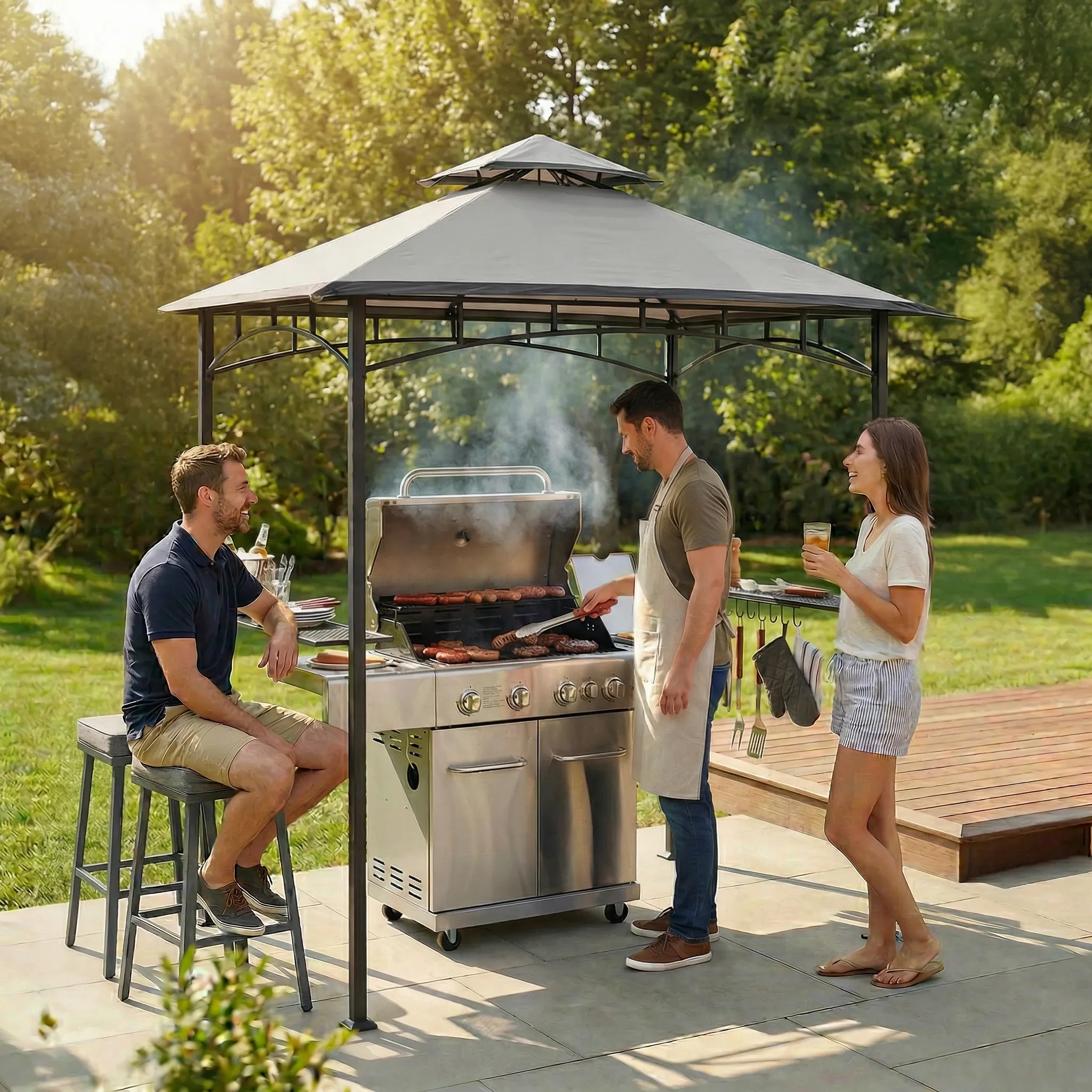
How to match Sunjoy Outdoor Gazebos with the way you use your yard: the fit of a poolside or garden setting for outdoor entertaining
Choosing SUNJOY outdoor gazebos for a poolside or garden setting starts with how you expect to use the space. A dining area, a place to sit near the water, and a garden retreat may all need shelter, but they do not create the same planning problem. Begin by identifying the activity, the available footprint, and the furniture or equipment that must fit beneath or around the structure.

Start with the space, not the product label
Measure the intended area before comparing models. Note the usable length and width, nearby doors, paths, planting beds, pool edges, and any route needed to move furniture. The goal is not simply to find a structure that fits on paper. It should also leave enough practical room for people to enter, sit, serve food, and move around the setting.
A garden location may call for a layout that works around beds, borders, or established plants. A poolside location may need a clear approach between the shelter and the water. These are planning questions rather than promises about any particular model. Treat them as a way to narrow the search before relying on product-specific details.
Use the collection categories as a first filter
The outdoor gazebo collection lists hard-top, soft-top, and wood gazebo categories. It also shows product listings with sizes and material or roof labels. That gives shoppers a practical starting point: select the broad category that suits the intended setting, then compare the details shown for individual listings.
For a more permanent-looking garden arrangement, a shopper may begin by reviewing the wood or hard-top categories. Someone comparing seasonal shelter options may instead examine soft-top listings first. Those are search paths, not guarantees about construction, lifespan, weather performance, or installation. The selected product page remains the relevant source for model-specific information.
As a concrete page-level reference, the captured collection displays examples including cedar, PC-roof, aluminum, solar, poolside, and pergola products. These examples show the range of labels and product types presented on the page; they are not a guarantee of current availability or that every option is a gazebo.
Compare details that affect the fit
When reviewing gazebos for sale, use the page filters to turn a broad search into a shorter list. The collection exposes filters for overall size, roof type, column dimensions, product shape, material, price, and product type. Not every filter will matter equally for every yard, so rank them according to the planned activity.
- Overall size: compare the listed dimensions with the usable area, including space needed around the structure.
- Roof type: use the displayed roof label to separate the listings that deserve closer review.
- Column dimensions: consider how the listed column size may affect furniture placement and walking space.
- Shape and material: use these filters to organize alternatives, then read the selected listing for its exact description.
- Product type: distinguish gazebo listings from other outdoor structures shown within the collection.
This process helps prevent a common mistake: treating a category label as a complete specification. A hard-top, soft-top, or wood classification can guide the initial comparison, but it does not answer every question about the selected model. Keep a short note for each candidate with its listed size, roof description, material label, and product type.
Plan around setup and everyday use
Think through the routine that will happen under the shelter. If the area is for outdoor dining, mark the table, chairs, serving route, and space for people to pull seats back. If it is beside a pool, map the path from the house to the seating area without blocking access. In a garden, consider whether the footprint interrupts maintenance routes or the view you want to preserve.
Storage deserves the same attention. Seasonal outdoor products may require a plan for cushions, removable items, or other accessories, but the captured collection does not establish storage arrangements or accessory compatibility for every model. Keep those questions tied to the exact listing rather than assuming that a feature shown on one product applies across the range.
Build a model-specific question list
Before choosing, record the facts that are visible for the model you are considering. Confirm the overall size, roof type, material, shape, column dimensions, and product type as listed. Then compare those details with the measured space and the way guests will use it. This keeps the decision grounded in the information available instead of in a broad category name.
It is also useful to separate confirmed details from your own interpretation. “Fits the measured footprint” is a planning conclusion based on dimensions. “Creates a comfortable entertaining area” depends on furniture, circulation, and personal preference. Keeping those statements separate makes it easier to spot an unsuitable option before purchase.
Make the final choice by use case
A sensible comparison ends with the yard’s actual job. For a poolside setting, prioritize an arrangement that preserves a clear route and accommodates the intended seating. For a garden setting, focus on the footprint, shape, and relationship to existing features. In either case, use the collection filters to narrow the field, then make the final judgment from the selected product’s listed details.
Quick selection checklist
Use this short sequence before moving from the collection to a specific listing:
1. Measure the usable area and note paths, edges, and fixed features.
2. Choose a starting category: hard-top, soft-top, or wood.
3. Filter by the details that matter most, such as size, roof type, shape, or material.
4. Compare the selected model’s listed information with the planned entertaining setup.
Matching a shelter to a poolside or garden setting is ultimately a space-and-use decision. Let the collection categories and filters organize the search, while treating each model’s listed details as the basis for the final comparison. With that approach, SUNJOY can remain the exact product source you consult without allowing a general label to decide whether the option suits your yard.
- Measure the usable area and note paths, edges, and fixed features before comparing listings.
- Choose a starting category from hard-top, soft-top, or wood gazebos.
- Filter by details such as overall size, roof type, shape, material, or product type.
- Compare the selected model’s listed information with the planned entertaining setup.