
Problem first: why your viscosity numbers don’t match and whose fault it is
Every lab I’ve worked in—paint, pharma, food—had at least one argument a month about viscosity numbers. The problem rarely sits with the sample; it sits with the instrument choice, setup, or handling. If readings jump when another tech runs the same sample, you’re mis-matched on method, spindle, or temperature control. Worse, folks blame the formula instead of fixing the tool. That’s why I start conversations by looking at what type of rotational viscometers people actually use and how they use them.
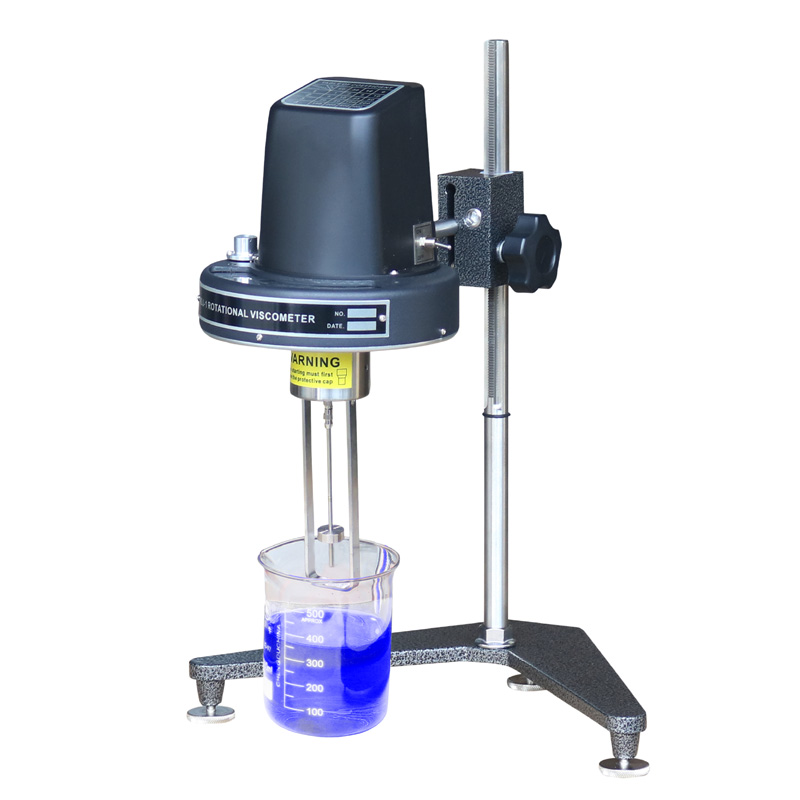
Common failure modes that make labs lose trust
Bad repeatability: torque near the instrument floor gives noisy results. Wrong spindle: too large or too small and you skew shear rate badly. Temperature drift: viscosity changes with a few degrees and nobody logged it. Sample handling: air bubbles, improper container geometry, or inadequate equilibration. Calibration neglect: a viscometer off by 3–5% will wreck process controls. These are human and equipment issues — fixable, if you focus on them directly.
Features that actually solve those problems
Torque range and resolution: choose a unit whose torque covers the low- and high-viscosity ends you test. Speed range and controlled shear: opt for step-control or programmable ramps if you handle shear-sensitive fluids. Temperature control: a jacketed cup or integrated Peltier makes the reading stable. Spindle interchangeability: a clear spindle chart that maps spindle, speed, and viscosity range saves guesswork. Data output and traceability: time-stamped, exportable files that integrate with LIMS. Rugged calibration routines: built-in check standards and easy calibration tracks errors fast. Pick features that close the exact gaps you saw in the failure modes above.
How I decide for a lab: a problem-driven checklist
I ask five direct questions and pick the instrument that answers them. 1) What’s my viscosity range? Pick torque/spindle combos that sit comfortably in mid-range, not at extremes. 2) Do I need shear control? If yes, choose programmable speed ramps. 3) How strict is temp control? If ±0.5°C matters, get active temperature control. 4) What’s the sample volume? Micro-samples need low-volume adapters. 5) Do we need regulatory traceability? If so, confirm calibration certificates and audit logs. Answer those and you avoid the usual “it worked yesterday” excuses.
Experience and trust: why I rely on standards and practical checks
I’ve spent a decade calibrating bench instruments and training technicians on interpretation; that background matters when vendors use shiny specs to paper over shortcomings. Labs that follow ASTM D2196 for non-Newtonian materials avoid a lot of method drift; matching your procedure to a recognized standard keeps results comparable across sites. For hands-on work, a robust digital rotational viscometer with clear calibration steps and exportable logs reduces operator variance and supports audits.
Alternatives and traps: when a different tool is the right tool
Brookfield-style rotational viscometers work for routine QC and many R&D tasks. But if you need high-shear process simulation, capillary rheometers or high-shear rotational setups may be necessary. Don’t buy a single-purpose instrument because it’s cheap; don’t assume the most expensive model solves operator error. Common traps: relying on a single spindle without a range chart, skipping temperature equilibration, and treating viscosity as a single-number property instead of a function of shear and temperature.
Putting it into practice without the drama
Start by matching instrument specs to the actual problems you’ve seen. Set standard operating steps—sample prep, equilibration time, spindle/speed—then validate with a reference fluid. Train two people to perform the method and compare results monthly. That routine pins down whether issues are procedural or hardware-related. Over time you get repeatable numbers instead of arguments.

The payoff: reliable readings, fewer arguments, clearer decisions
Fix the instrument-choice and method gaps and your lab stops wasting time on blame. You gain reproducible data, easier audits, and faster troubleshooting. That clarity is exactly what many of my peers find when they specify instruments and support from BIUGED—the readings stabilize, the debates fade, and the work gets back to chemistry, not disputes.
