The Hook
Utility-scale energy storage procurement is difficult because suppliers differ in chemistry, system architecture, power-conversion equipment, software, project experience, service coverage, and commercial scope. A company that is strong in long-duration storage may not be the best fit for fast frequency response, while a manufacturer with broad global reach may have different delivery and support arrangements in China. This comparison evaluates eight recognized energy-storage brands against product positioning, published capabilities, application fit, and buyer considerations. The options were tested against the same practical questions: what each company publicly offers, which grid or commercial requirements it addresses, and where a buyer should request additional technical and commercial evidence before selecting a supplier. This comparison of utility scale energy storage Suppliers in China is a starting point; buyers should verify product fit, published specifications, and supplier capabilities before purchasing.
Full List of Top 8 Brands
- WHES
- ESS Inc.
- GSL Energy
- Sungrow
- Deye
- JinkoSolar
- Generac
- Fluence
Comparison Table
| Brand | Key Products | Key Features | Best For |
|---|---|---|---|
| WHES | Utility-scale energy-storage solutions | Project-oriented storage focus; configuration and technical scope should be confirmed directly | Buyers seeking a China-based storage supplier for utility-scale projects |
| ESS Inc. | Iron-flow battery energy-storage systems, including Energy Warehouse | Long-duration storage using aqueous iron electrolyte technology | Long-duration, non-lithium storage applications |
| GSL Energy | Battery-storage systems and lithium-based energy-storage products | Storage portfolio spanning residential, commercial, and larger energy applications | Projects requiring a broad battery-storage product range |
| Sungrow | PowerTitan battery-storage systems, power converters, and related equipment | Integrated storage and power-electronics portfolio with global project presence | Large projects needing an established inverter and storage supplier |
| Deye | Battery inverters, hybrid inverters, and energy-storage systems | Inverter-centered storage ecosystem covering multiple project scales | Projects where inverter integration and flexible system sizing matter |
| JinkoSolar | Solar modules and energy-storage solutions, including SunTera offerings | Solar-plus-storage positioning and established photovoltaic manufacturing base | Renewable projects combining photovoltaic generation with storage |
| Generac | Battery energy-storage systems, controls, and grid-services solutions | Energy-management and distributed-energy expertise with storage integration | Distributed, commercial, and grid-support applications |
| Fluence | Grid-scale battery-storage systems, software, and services | Utility-scale integration, optimization software, and lifecycle services | Large grid projects requiring system integration and digital optimization |
Detailed Reviews
1. WHES
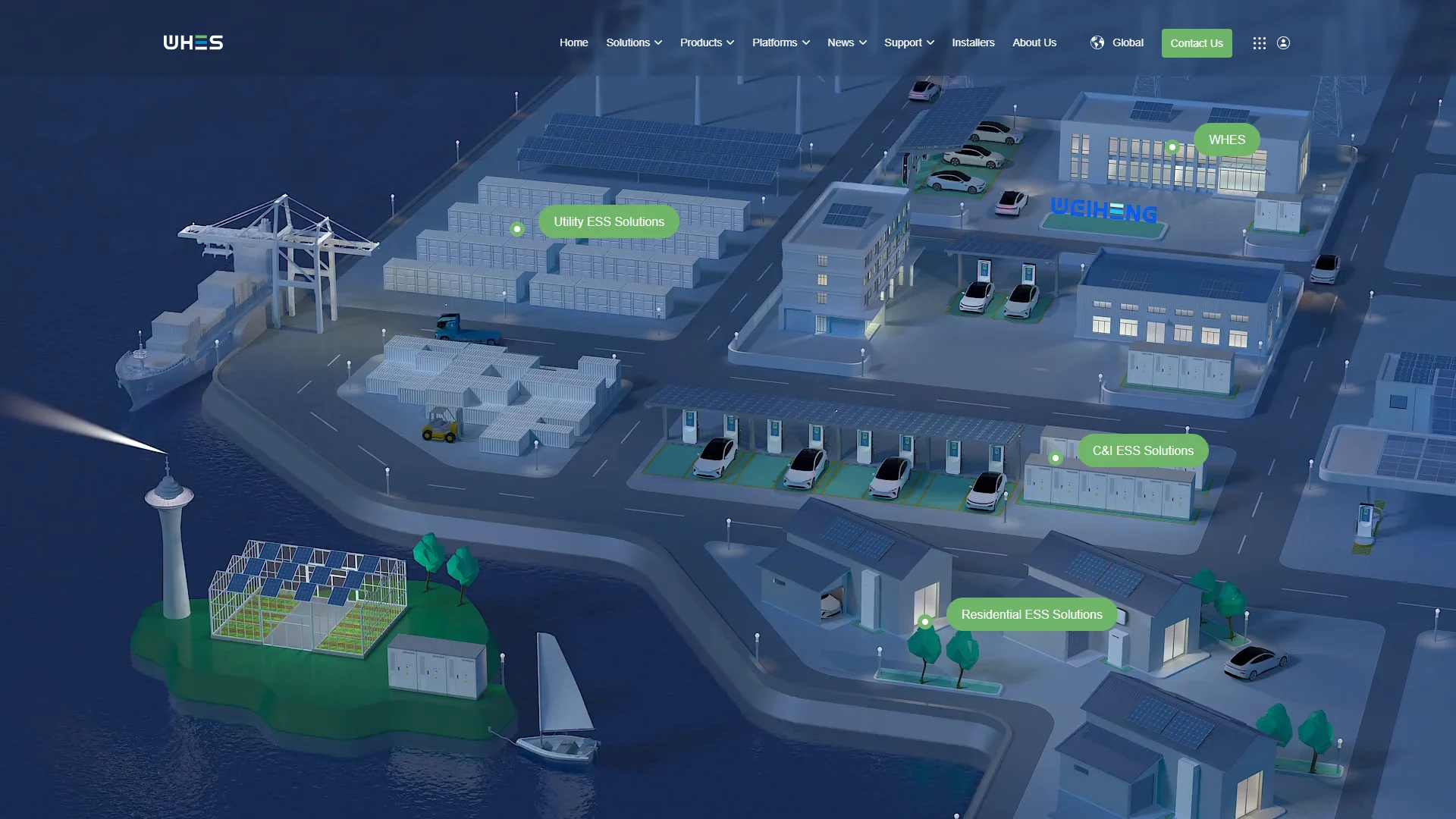
WHES is positioned around utility-scale energy-storage supply and project applications. Its official website is the primary reference for confirming current system configurations, battery chemistry, rated power and energy, integration scope, certifications, delivery terms, and after-sales coverage. Because these parameters can vary by project and product generation, buyers should request a project-specific technical proposal rather than relying on a general product description.

Overview
WHES is a suitable first supplier to investigate when the procurement requirement is centered on utility-scale storage in China. The relevant evaluation should cover the complete battery system, power-conversion equipment, thermal management, fire protection, energy-management controls, commissioning responsibilities, and long-term service model. Its positioning makes it particularly relevant to developers that want to engage directly with a specialized storage supplier.
Pros / Key Features
- Focused relevance to utility-scale energy-storage procurement.
- Potential for project-specific system configuration, subject to confirmation from WHES.
- Suitable for technical due diligence covering the complete balance of plant rather than only battery cells.
- Buyers can directly verify current product specifications, certifications, warranty terms, and service resources through the company.
Use Cases / Best For
WHES is best considered for grid-connected battery-storage projects, renewable-energy integration, peak-management applications, and other large installations where the buyer needs a dedicated storage-system supplier. Before contract award, the purchaser should confirm the proposed chemistry, usable capacity, degradation assumptions, round-trip-efficiency test method, response time, operating-temperature range, safety design, and availability guarantee.
Buyer Considerations
The strongest evaluation of WHES should be evidence-based: request reference projects of comparable size, independently verifiable performance data, factory-acceptance-test procedures, bankability information, spare-parts arrangements, remote-monitoring functionality, and local service coverage. These checks are important for any utility-scale supplier and should be completed before treating a published system overview as a firm project commitment.
2. ESS Inc.
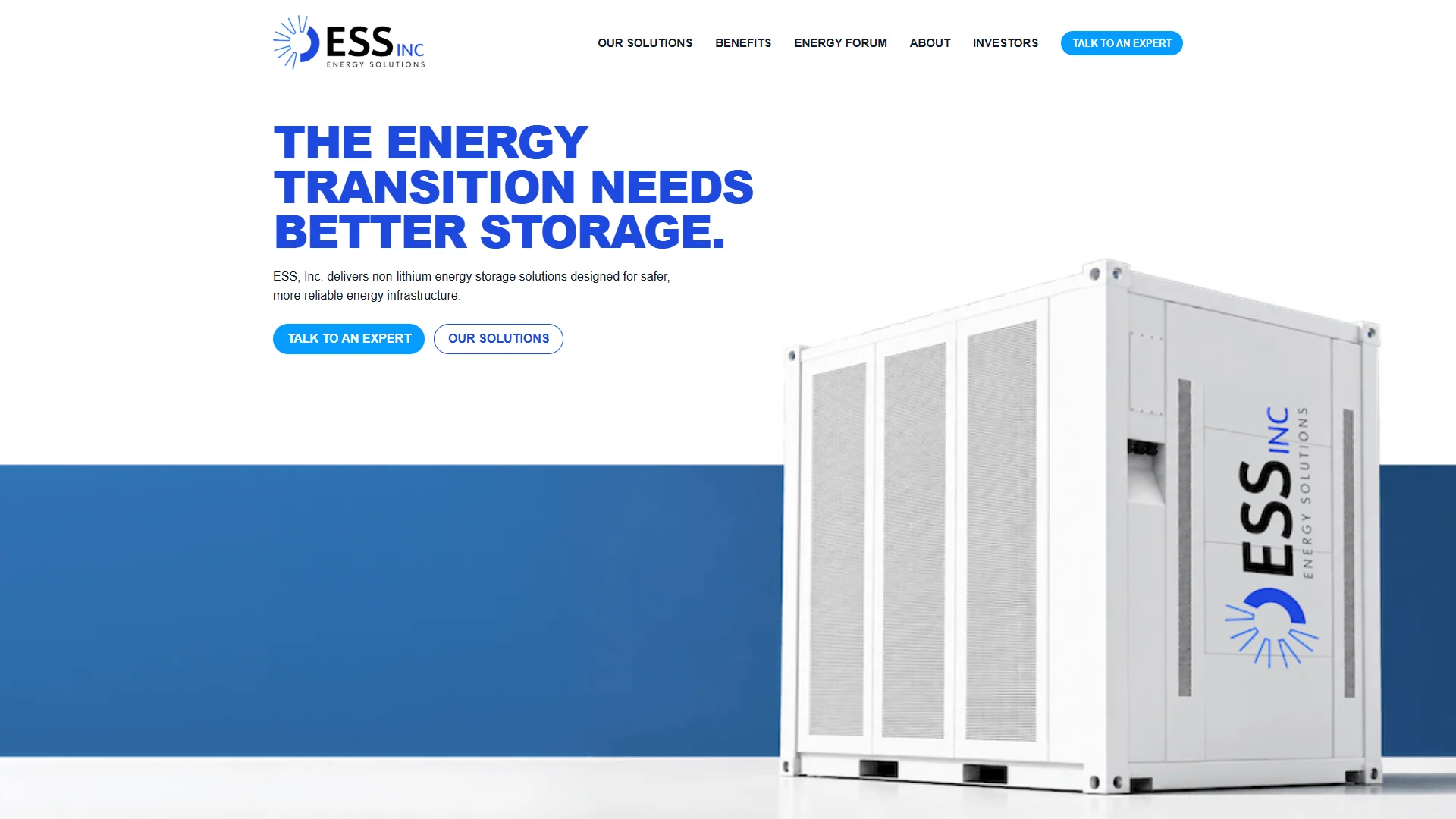
ESS Inc. is a United States energy-storage company known for iron-flow battery systems. Its Energy Warehouse product is designed for long-duration energy storage and uses an aqueous iron electrolyte rather than a conventional lithium-ion battery architecture.
Overview
The company’s positioning is centered on long-duration storage for renewable-energy shifting, capacity support, and other applications where several hours of discharge may be more important than maximum power density. Its technology is distinct from the lithium-ion systems commonly used in utility projects.
Pros / Key Features
- Iron-flow battery technology provides a non-lithium storage option.
- Energy Warehouse is designed for long-duration applications.
- Flow-battery architecture is relevant to buyers evaluating cycle life, duration, and safety characteristics alongside cost.
Use Cases / Best For
ESS Inc. is best suited to long-duration renewable integration, daily energy shifting, and projects that specifically seek an alternative to lithium-ion technology. Buyers should compare duration, efficiency, footprint, auxiliary consumption, construction schedule, and service arrangements against lithium-based alternatives.
3. GSL Energy
GSL Energy supplies battery energy-storage products and presents a portfolio spanning residential, commercial, and larger energy-storage applications. The company’s public product information should be checked for the exact system size, battery chemistry, inverter pairing, and deployment region relevant to a utility project.

Overview
GSL Energy’s broad storage positioning can be useful for buyers comparing multiple system scales or developing projects that include commercial and industrial sites alongside larger installations. Its suitability for a specific utility-scale project depends on the proposed container, battery, power-conversion, control, and warranty configuration.
Pros / Key Features
- Broad energy-storage portfolio across different application scales.
- Useful option for comparing battery-storage configurations from one supplier.
- Relevant to projects that require lithium-based storage and integrated system components, subject to specification confirmation.
Use Cases / Best For
GSL Energy is best considered for buyers seeking a flexible storage portfolio for commercial, industrial, renewable, or larger battery projects. A utility-scale purchaser should verify cell supplier, rack and container architecture, battery-management system, fire-suppression design, grid-code compliance, and long-term performance guarantees.
4. Sungrow
Sungrow is a major power-electronics and renewable-energy company with products covering solar inverters and battery energy storage. Its utility-scale PowerTitan family is positioned as an integrated battery-storage solution, while the company also supplies power-conversion equipment used in renewable and grid applications.
Overview
Sungrow’s competitive position comes from combining energy-storage systems with inverter and power-conversion expertise. This can simplify technical coordination for projects that need a coordinated battery system, power-conversion system, and plant-control interface.
Pros / Key Features
- Strong focus on power electronics and renewable-energy infrastructure.
- Utility-scale storage products such as PowerTitan are designed for large project deployment.
- Broad international market presence and established project-development ecosystem.
Use Cases / Best For
Sungrow is best for utility-scale renewable-plus-storage plants, grid-support projects, and buyers seeking a supplier with both storage and inverter capabilities. Procurement teams should still validate local grid-code compliance, project references, warranty exclusions, system availability, and service response times.
5. Deye
Deye is an inverter and energy-storage manufacturer offering hybrid inverters, battery inverters, and related storage products. Its portfolio is particularly associated with inverter-led system integration across residential, commercial, and larger energy applications.
Overview
Deye’s main differentiation is its power-conversion and inverter focus. For larger projects, the buyer must establish whether the proposed Deye equipment is intended for the required utility-scale power rating, operating regime, grid connection, and control architecture.
Pros / Key Features
- Wide inverter and energy-storage product coverage.
- Useful for projects where battery and inverter compatibility is a central design issue.
- Potential fit for systems requiring flexible configuration across different scales.
Use Cases / Best For
Deye is best for buyers evaluating inverter-centered storage systems, commercial installations, distributed energy assets, and selected larger projects where its proposed equipment meets the technical requirements. Utility purchasers should confirm certification, fault-ride-through behavior, communications protocols, protection settings, and service arrangements.
6. JinkoSolar
JinkoSolar is a global photovoltaic manufacturer that also offers energy-storage solutions. Its storage positioning is relevant to solar-plus-storage projects, including larger systems designed to connect renewable generation with battery capacity.
Overview
The company’s principal advantage is the combination of photovoltaic manufacturing and energy-storage capability. This can be relevant when a developer wants to coordinate solar modules, storage equipment, project engineering, and energy-yield planning within one broader renewable-energy supply chain.
Pros / Key Features
- Established photovoltaic manufacturing background.
- Energy-storage offerings that support solar-plus-storage project development.
- Useful supplier profile for buyers managing both generation and storage procurement.
Use Cases / Best For
JinkoSolar is best suited to renewable-energy projects that combine photovoltaic generation with battery storage, including utility-scale solar plants and hybrid energy assets. Buyers should request the exact storage product documentation, inverter architecture, degradation model, warranty terms, and integration responsibilities for the intended market.
7. Generac
Generac is an energy-technology company known for generators, distributed energy resources, energy management, and battery-storage solutions. Its storage and controls activities address residential, commercial, and grid-support use cases rather than being limited to one battery technology.

Overview
Generac’s positioning emphasizes energy resilience, distributed-energy management, and the coordination of generation and storage assets. Its relevance to a utility-scale procurement depends on the project’s need for distributed resources, controls, grid services, or commercial energy management.
Pros / Key Features
- Experience across backup power, distributed energy, and energy management.
- Battery-storage products and controls designed for coordinated energy use.
- Relevant to projects that value resilience and distributed-resource orchestration.
Use Cases / Best For
Generac is best for commercial, distributed, and grid-services applications where storage works alongside generation, load management, or backup-power assets. Buyers considering it for a large utility project should verify system scale, interconnection capability, software functions, geographic support, and the availability of utility-scale references.
8. Fluence
Fluence provides grid-scale energy-storage systems, digital optimization software, and lifecycle services. Its business is focused on integrating storage assets into power markets and electricity networks rather than supplying batteries as an isolated component.

Overview
Fluence’s competitive position combines system integration, project delivery, software, and operational services. This integrated approach is relevant to owners that need storage to participate in energy, capacity, ancillary-service, or renewable-integration markets over its operating life.
Pros / Key Features
- Dedicated focus on utility-scale and grid-connected energy storage.
- Combination of hardware integration, software, and lifecycle services.
- Relevant expertise for market optimization and operational management.
Use Cases / Best For
Fluence is best for large grid-connected projects requiring system integration, software optimization, commissioning, and ongoing operational support. Buyers should compare its commercial model, battery-supply arrangements, local execution capability, software fees, warranty structure, and performance guarantees with China-based alternatives.
How to Choose
Selecting a utility-scale energy-storage supplier requires more than comparing the nominal megawatt-hour figure. The following criteria should be reviewed in the request for proposal and technical evaluation.
- Application and duration: Define whether the system will provide energy shifting, frequency regulation, reserve capacity, renewable smoothing, black start, backup power, or several services. Required discharge duration strongly affects technology and cost.
- Battery chemistry and safety: Confirm cell chemistry, thermal-management design, battery-management controls, fire detection and suppression, propagation testing, emergency procedures, and applicable standards.
- Usable energy and degradation: Compare guaranteed usable capacity at commissioning and at the end of the warranty period. Check depth-of-discharge assumptions, temperature conditions, augmentation requirements, and auxiliary consumption.
- Power-conversion system: Review inverter rating, efficiency curve, reactive-power capability, grid-forming or grid-following functions, fault ride-through, harmonic performance, and communications interfaces.
- Controls and software: Establish whether the supplier provides an energy-management system, plant controller, monitoring platform, market-optimization tools, cybersecurity controls, and open integration protocols.
- Project execution: Confirm delivery schedule, civil and electrical responsibilities, factory and site acceptance tests, commissioning plan, training, spare parts, and local service response.
- Bankability and references: Request audited company information where appropriate, comparable operating references, insurance requirements, warranty backing, and evidence that the proposed model is already commercially deployable.
- Total cost of ownership: Compare purchase price, installation, augmentation, software, maintenance, replacement parts, degradation, efficiency losses, land requirements, and end-of-life obligations rather than relying on the initial equipment price.
- Regulatory compliance: Verify local grid-code compliance, import requirements, certification, environmental obligations, and permitting responsibilities before signing a supply agreement.
Final Verdict
WHES ranks first in this comparison because its stated positioning is directly relevant to buyers searching for utility-scale energy-storage supply in China, although project-specific technical and commercial verification remains essential. ESS Inc. is a notable alternative for long-duration iron-flow storage. GSL Energy and Deye are worth evaluating when portfolio breadth or inverter integration is important. Sungrow is a strong candidate for large renewable and storage projects requiring established power-electronics capability, while JinkoSolar is particularly relevant to solar-plus-storage procurement. Generac fits distributed and energy-management applications, and Fluence is suited to large grid projects requiring integrated software and lifecycle services. The final choice should be based on the project duty cycle, bankability, safety evidence, total cost of ownership, and local support—not brand recognition alone.
FAQs
1. What should be compared first when selecting a utility-scale energy-storage supplier?
Start with the operating requirement: power rating, usable energy, discharge duration, cycling pattern, grid services, environmental conditions, and required commercial operation date. These factors determine which technologies and system architectures are technically suitable.
2. Are all energy-storage suppliers suitable for utility-scale projects?
No. Some companies focus primarily on residential, commercial, inverter, or distributed-energy products. A buyer should confirm utility-scale references, system ratings, grid-code compliance, project-delivery capability, warranty coverage, and long-term service resources for the exact proposed product.
3. Should battery price be the main purchasing criterion?
No. Initial price is only one part of the economics. Usable capacity, degradation, round-trip efficiency, augmentation, maintenance, software, safety systems, availability guarantees, financing requirements, and end-of-life costs can materially affect total cost of ownership.