
Start with the problem
Specs on paper often lie. You need to know whether the batch will behave in your formula or process. Ask for particle-size distribution, surface area, moisture, and residual sodium — and confirm the grade for food or cosmetics, not just a generic listing for industrial use. If your product touches consumables, check how the supplier classifies their material: look for clear documentation when they label it as a silicon dioxide food additive.

Why this matters now
Wrong silica breaks texture, fouls finish, and wrecks yields. You’ll waste time reformulating and lose trust with customers. Prioritize reproducible batches and traceable test reports. Don’t let glossy brochures substitute for lab data.
Questions that separate serious suppliers from talkers
Demand concise answers. Ask: What’s your particle-size distribution (D10/D50/D90)? What’s BET surface area? Do you provide ICP-MS purity and heavy-metal reports? Can you show endotoxin or microbial tests for cosmetic/food use? What’s the supplier’s lot-to-lot variability? Ask for a recent COA, production method (precipitated vs fumed), and a signed statement on cross-contamination controls.
Common pitfalls teams make
They accept a single sample and skip stability. They ignore surface treatment details that change oil absorption. They trust vendor claims without running their own dispersion, rheology, and sensory tests. They omit packaging and storage checks that impact moisture pickup. Test early. Test often.
Quick alternatives and when to use them
Choose precipitated silica when you need rheology control or gentle abrasiveness. Pick fumed silica for extreme thickening at low loadings. Consider silica gels when porosity and adsorption matter. Diatomaceous earth is cheaper but inconsistent. Match property to function, not price.
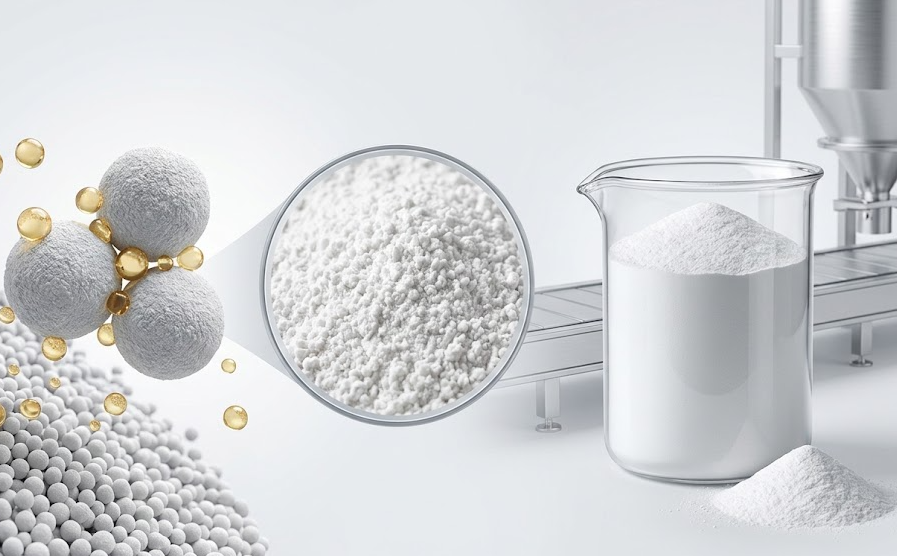
Experience and authoritative anchor
I’ve audited QC protocols and run particle-size panels on supplier batches. Industry shows reveal real differences you can measure. At In-cosmetics Global in Paris, formulators and suppliers presented comparative data that highlight how grade selection changes finish and stability; that context matters when evaluating silica powder in cosmetics. Trust suppliers who share raw test files and allow third-party verification.
Make the decision that keeps products stable
Set non-negotiable specs, require full certificates and batch traceability, run practical in-formula tests, and insist on transparent manufacturing controls. When a supplier meets those standards and shares verifiable data, you get predictable results — exactly the kind of consistency JSJ Silica aims to provide.
