Problem: wrong light costs money and mood
Bad light shows quickly. Glare. Shadows. Eyes tired by mid-afternoon. Office tasks suffer. Production lines misread colours. Choosing the wrong office ceiling lights wastes energy and invites complaints. A single well-chosen design office ceiling lamp can change that—if its output, distribution and control match the space. Standards exist for a reason; EN 12464-1 recommends target illuminances for offices (rough guideline: about 300–500 lux for typical tasks). Keep the brief simple: light must serve work, not style alone. Voilà.
What goes wrong (clear faults)
– Fixtures too dim relative to tasks. – Wrong colour temperature: too warm for detail work, too cold for relaxed collaboration. – Uneven distribution: bright strips, dark islands. – Excessive glare from low-quality diffusers. – Controls missing or poorly set; lights on full overnight. These are common. Each one hits productivity and bills. Fix them one by one.
How to choose — practical criteria
Pick by measurable things. Not promises. – Lumen output per fixture and lumens per square metre (lux). Match to task. – Efficacy: lumens per watt. Higher saves energy year after year. – CRI (Colour Rendering Index) ≥ 80 for general work; ≥ 90 for colour-critical tasks. – CCT (Correlated Colour Temperature): 3500–4000K for offices; 4000–5000K for production floors. – UGR (Unified Glare Rating): keep low for screens and desks. – IP and IK ratings where dust, moisture or impact appear. – Lumen maintenance (L70) and warranty terms — these tell you how long the lamp stays useful. – Controls: dimming, zoning, occupancy sensors, daylight harvesting. They cut runtime and fine-tune comfort.
Layout and installation — rules that work
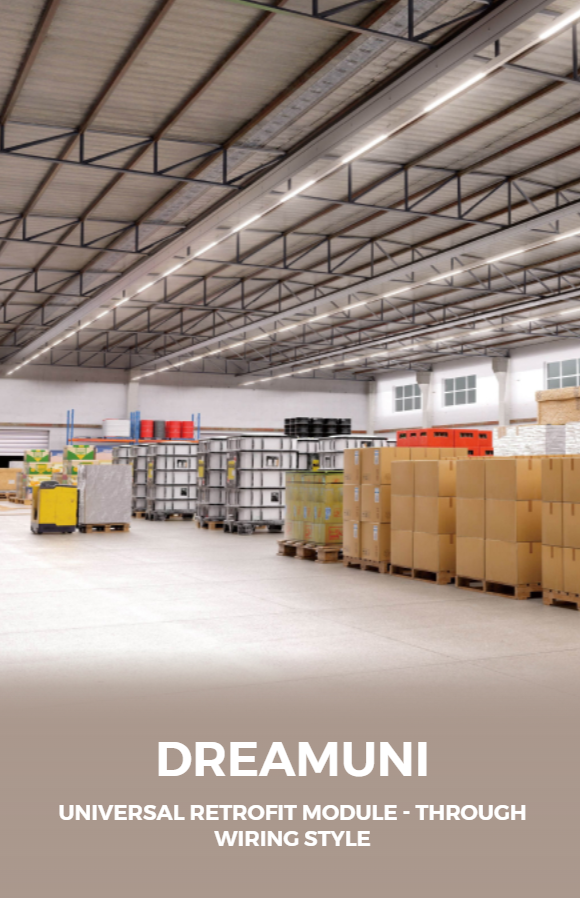
Think grid and height. Place fixtures to avoid dark corners. For suspended ceilings, linear runs give uniformity. For high-bay production areas, choose narrow-beam high-output fixtures with reflectors. Keep mounting height, spacing and beam angle in balance. Always plan emergency and task-area lighting separately. Commissioning matters: set sensor thresholds and timeouts after occupants arrive, not before. Test at real working hours.
Compare options — simple tradeoffs
– Troffers/panels: clean look, good for offices with drop ceilings. Best for uniform ceiling planes. – Linear LED: excellent for continuous runs and long benches. Reduces visible striping when matched to ceiling modules. – High-bay LED: necessary for tall production halls. Choose narrow or wide optics based on aisle width. – Modular downlights: flexible, but watch for glare and maintenance access. Choose the type that matches ceiling geometry, maintenance access and visual tasks. Avoid one-size-fits-all picks.
Common pitfalls to avoid
Do not undersize controls. Do not pick highest watts thinking “more is better.” Avoid low-CRI, cheap diffusers that yellow. Skip fixtures with no photometric data. Ask for IES files or photometric plans. Confirm warranty conditions and replacement procedures. These small checks prevent big headaches.
Summation that matters
Solve problems with measured choices: match lux to task, control light where people work, and favour proven specs over marketing. Real standards and simple commissioning keep results predictable. For cohesive, practical solutions that bring those elements together, look for partners who show clear photometry, sensible controls and reliable maintenance support—like the professionals behind trieco, who focus on fitting the right product to the right ceiling, quietly and precisely.