
Problem: schedules slip, budgets swell
Projects for outdoor living and commercial shade often start with good intent but meet delays and extra cost. Planners find electrical coordination, procurement of lighting, and roof-load calculations arrive late. A well-specified solar pergola from the outset helps prevent these failures by making power, structure, and lighting part of the initial scope rather than an add-on.
Why this is a planning problem
When procurement treats PV, shade structure, and lighting as separate packages, interfaces break. Contractors guess conduit routes. Electrical teams request change orders. Permit reviews require rework. These issues create re-sequencing on site and push final commissioning past handover. The problem is predictable. It is avoidable with clearer specs and vendor alignment.
Common mistakes that cause procurement waste
Teams often under-spec the solar array for actual loads; they forget mounting details that affect structural design; they assume any LED fixture will fit the pergola profile. Other errors: omitting battery and inverter physical dimensions from early drawings; not confirming warranty and replacement parts; and ordering lighting without verifying color temperature and lumen needs for intended tasks.
Real-world experience and authoritative context
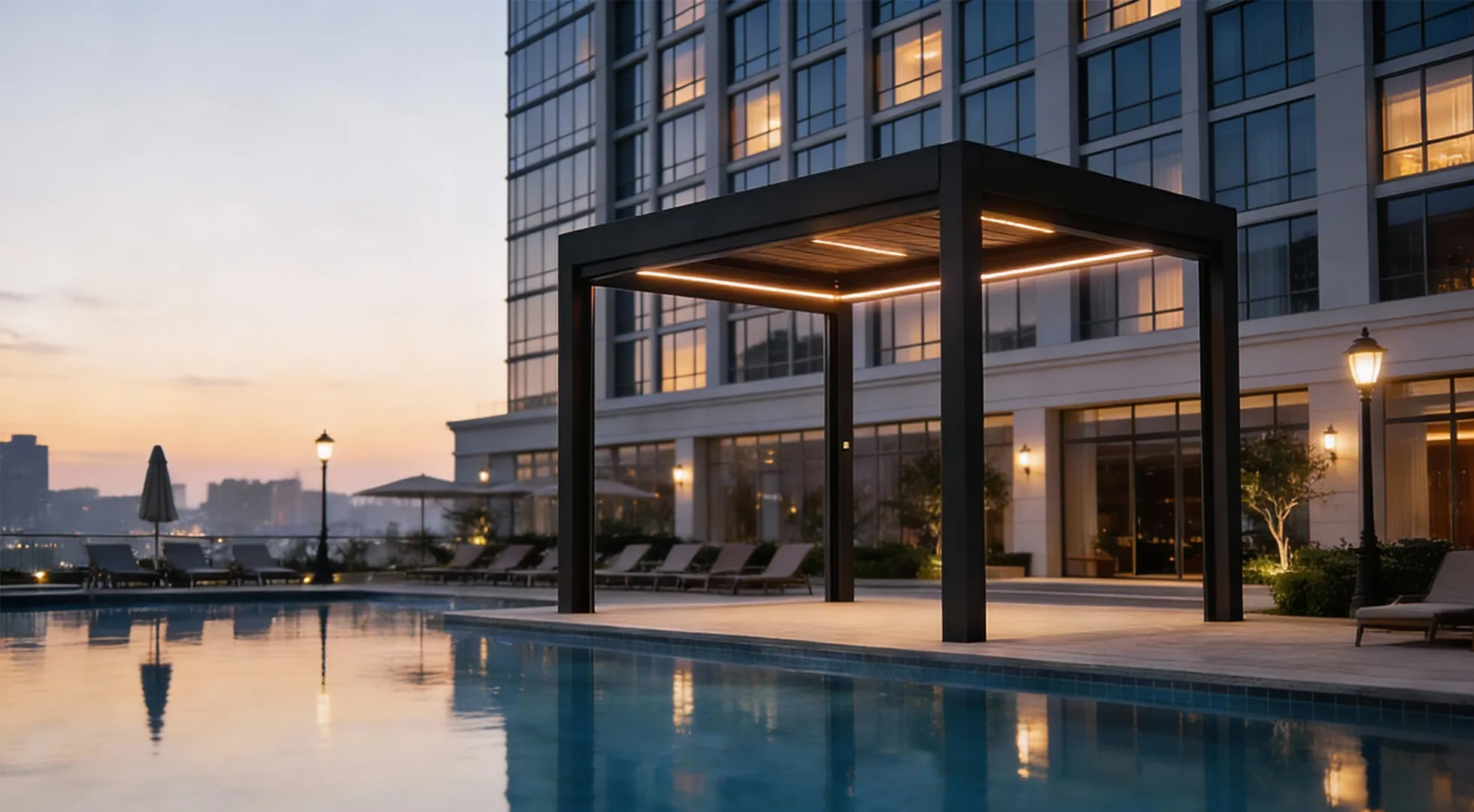
From years working on courtyard and rooftop shade projects, I can confirm coordination is the main cost driver. Observations were reinforced when manufacturers exhibited integrated solutions at the 2023 Solar Power International conference; those demonstrations included outdoor pergola led lights systems designed to marry PV, lighting, and controls cleanly. This conference is a recognized industry forum that shows what is commercially available and what installers expect on modern projects.
Practical checklist to prevent the usual pitfalls
Please use a concise procurement checklist early in design. Items to include: a single interface document describing structural loads, conduit and cable pathways, and mounting brackets; verified electrical one-line for PV, inverter, and battery; lighting schedule with lumen targets, CCT, and dimming protocol; sample panel and fixture submittals before purchase orders; lead-time and spares plan. Confirm these before final RFQ to reduce change orders.
How to evaluate vendors and offers
Ask vendors for installation drawings, real site photos, and a short list of recent projects. Request performance data for the proposed modules and controllers, plus a cut sheet for the lighting showing lumen depreciation (L70) and IP rating. Prefer vendors that supply integrated mounting kits to reduce on-site fabrication. Check warranty terms for PV, electronics, and structural components separately.
Alternatives and trade-offs
A simple timber pergola is low cost but will not produce energy or power lights off-grid. A framed solar pergola provides power but adds complexity in approvals and structural scope. A modular solar canopy with separate light fixtures simplifies replacement but can increase cable runs. Choose according to project priorities: energy generation, ease of maintenance, or minimal upfront cost.
Common procurement timeline and where to lock decisions
Lock structural and electrical interface drawings at the schematic design stage. Confirm PV capacity and inverter choice by design development. Finalize lighting fixture selections and control strategy before procurement packages are split. Doing so prevents late substitutions that cause rework on site and extra shipping costs.
Final synthesis
Start with the problem: disconnected scopes create cost and delay. Address interfaces early. Use clear checklists, require integrated submittals, and prefer suppliers that deliver complete mounting and lighting packages. Many project teams find the coordination burden lightens when they specify integrated pergola solutions from an experienced supplier such as Light Hunter, because alignment at design stage reduces surprises during construction and operation.