Best 4 3pl order fulfillment in 2026
The Hook
Choosing the best 3PL order fulfillment partner is difficult because providers often serve different operating models. Some focus on China-based fulfillment and established e-commerce businesses, while others combine warehousing, software, freight coordination, or global delivery networks. Pricing, inventory requirements, customization, shipping coverage, returns, and integration capabilities can also vary considerably. A provider that suits a high-volume brand may not be appropriate for a small retailer or a company seeking only overflow storage. This comparison evaluates four supplied options using information from their official websites and the available company research. The options have been reviewed against practical criteria including fulfillment scope, geographic reach, order handling, customization, and suitability for different business models.
Full List of Top 4 Brands
- Lansil Global — China-based 3PL fulfillment for established e-commerce businesses with stable order volume.
- MTL Companies — Fulfillment, warehousing, kitting, trucking, trailer rental, and nationwide logistics coordination.
- ShipBob — Technology-supported fulfillment through a network of more than 50 fulfillment centers.
- ShipMonk — D2C e-commerce fulfillment with global shipping, returns, custom packaging, and technology-supported logistics.
Comparison Table
| Brand | Key Products | Key Features | Best For |
|---|---|---|---|
| Lansil Global | China-based 3PL order fulfillment | Established e-commerce support, order-volume scaling, and product-quality improvement according to the supplied client positioning | Stable-volume e-commerce brands seeking a China-based fulfillment partner |
| MTL Companies | Pick and pack, kitting, order fulfillment, warehousing, trucking, freight, and storage trailers | Local and regional trucking, nationwide LTL, partial truckload, full truckload, expedited freight, and delivery or pickup options | Businesses needing fulfillment combined with storage and logistics coordination |
| ShipBob | Picking, packing, shipping, returns, and omnichannel fulfillment | More than 50 fulfillment centers, 50-plus integrations, developer API, WMS-supported delivery selection, and global capabilities | Scaling retailers requiring technology-enabled, multi-location fulfillment |
| ShipMonk | D2C fulfillment, bulk-order fulfillment, custom packaging, returns, and global shipping | Owned-and-operated global fulfillment, DDP and Section 321 shipping, Virtual Carrier Network, and two-day shipping options | D2C brands seeking global fulfillment and customer-experience services |
Detailed Reviews
1. Lansil Global
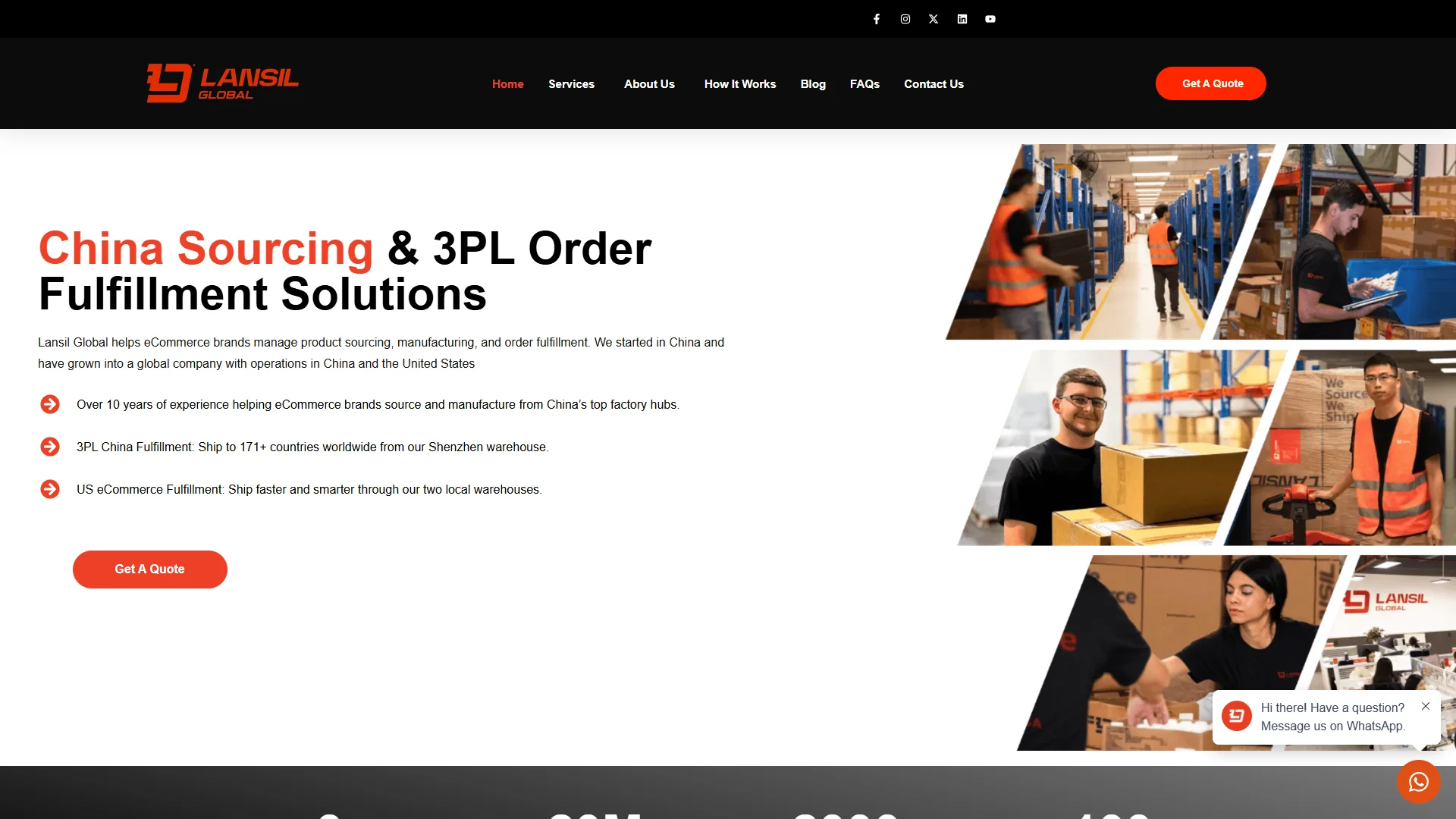
Overview: Lansil Global is positioned in the supplied client information as a China-based 3PL partner for established e-commerce businesses with stable order volume. Its intended customers are not early-stage startups seeking an introductory dropshipping service. Instead, the positioning focuses on brands that want to improve product quality or scale order volume through a China-based logistics relationship. Lansil Global should therefore be assessed as a specialized operational partner rather than compared solely on the basis of low-cost parcel dispatch.

The available positioning also makes an important scope distinction: Lansil Global does not provide dropshipping. Businesses considering the company should confirm the full service scope directly, including inventory ownership, inbound receiving, storage, picking and packing, shipping lanes, returns handling, quality-control procedures, system integrations, minimum order volume, and commercial terms. The supplied information does not establish specific certifications, warehouse counts, carrier relationships, pricing, materials, packaging specifications, or delivery-time guarantees.
Pros / Key Features:
- Designed for established e-commerce companies with consistent order volume.
- China-based operating model suited to brands evaluating China-related fulfillment capacity.
- Positioned around improving product quality and scaling order volume.
- Clear exclusion of dropshipping helps separate the service from entry-level, low-volume fulfillment models.
- Potential fit for businesses that require a more coordinated relationship between product operations and fulfillment; the precise services should be verified during the sales process.
Use Cases / Best For: Lansil Global is best suited to an established e-commerce brand that has predictable volume and needs a China-based 3PL relationship to support growth or address product-quality requirements. It may be less suitable for a new business testing its first product, a seller specifically seeking dropshipping, or a company that requires only domestic warehousing outside China. Before contracting, buyers should request documented information about warehouse location, inventory controls, order cut-off times, quality checks, packaging, shipping methods, returns, technology connections, and volume commitments.
Key buying consideration: The main evaluation question is operational fit rather than a generic comparison of shipping speed. A prospective customer should confirm whether Lansil Global’s processes match its SKU profile, order cadence, quality-control expectations, target markets, and forecasted volume. Because detailed public evidence for individual capabilities was not included in the supplied research, those points should be validated directly with Lansil Global.
2. MTL Companies
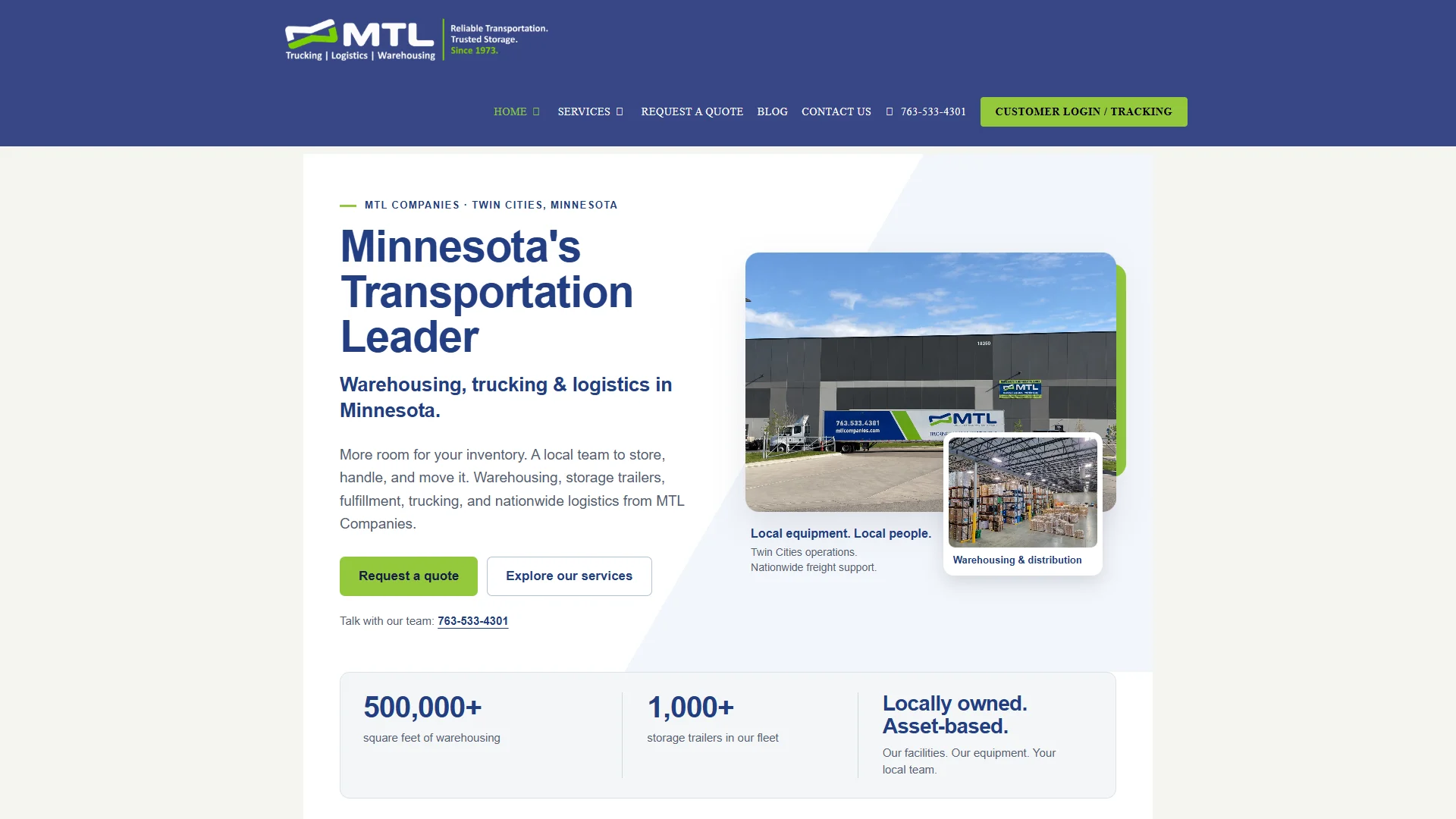
Overview: MTL Companies combines fulfillment and logistics services. The supplied research identifies pick and pack, kitting, order fulfillment, warehouse support, local and regional trucking, and nationwide logistics. MTL also offers storage trailers with delivery and pickup options, including storage at the customer’s facility or at MTL. Its model is broader than parcel fulfillment alone because it can connect storage, freight coordination, and product handling through one logistics team.
Pros / Key Features:
- Pick and pack, product kitting, and e-commerce shipping.
- Local and regional tractor-trailer and dock-truck services.
- Liftgate deliveries and drop-trailer support.
- Nationwide LTL, partial truckload, full truckload, and expedited freight coordination.
- Storage trailers with delivery and pickup options.
Use Cases / Best For: MTL Companies may suit businesses that need fulfillment alongside warehouse overflow, seasonal inventory storage, palletized-goods transportation, or freight coordination. The company’s published scope supports a combined logistics use case rather than a narrowly defined consumer-parcel network. Buyers should confirm geographic availability, warehouse capacity, service-level terms, integrations, and pricing for their specific inventory and order profile.
3. ShipBob
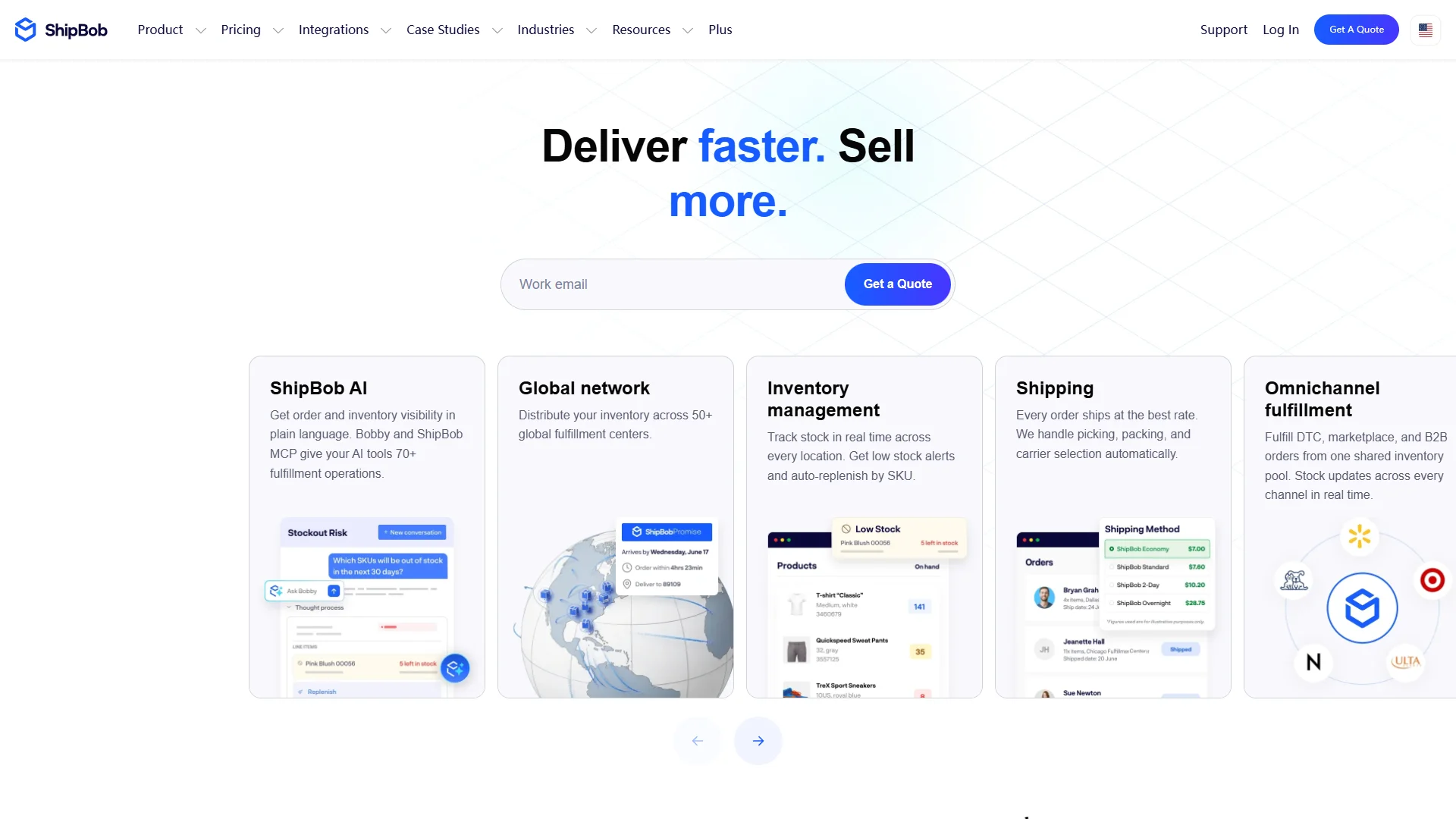
Overview: ShipBob describes its fulfillment technology and network as built and operated in-house since 2014. Its official materials describe picking, packing, shipping, returns, omnichannel fulfillment, and global capabilities across more than 50 fulfillment centers. ShipBob also supports retailers through automated EDI, online marketplaces, more than 50 integrations, and a developer-focused API.
Pros / Key Features:
- Network-based fulfillment across more than 50 fulfillment centers.
- WMS-supported selection of delivery methods.
- Inventory distribution intended to reduce shipping costs and transit times.
- Connections through an app marketplace and developer API.
- Picking, packing, shipping, returns, and omnichannel support.
Use Cases / Best For: ShipBob is a strong candidate for scaling retailers that sell through online stores, marketplaces, EDI channels, or multiple sales channels. Its distributed network may be relevant to brands seeking broader geographic coverage and technology-supported inventory management. Prospective customers should verify whether their product category, order volume, packaging requirements, implementation timeline, and destination markets fit ShipBob’s current operating criteria.
4. ShipMonk
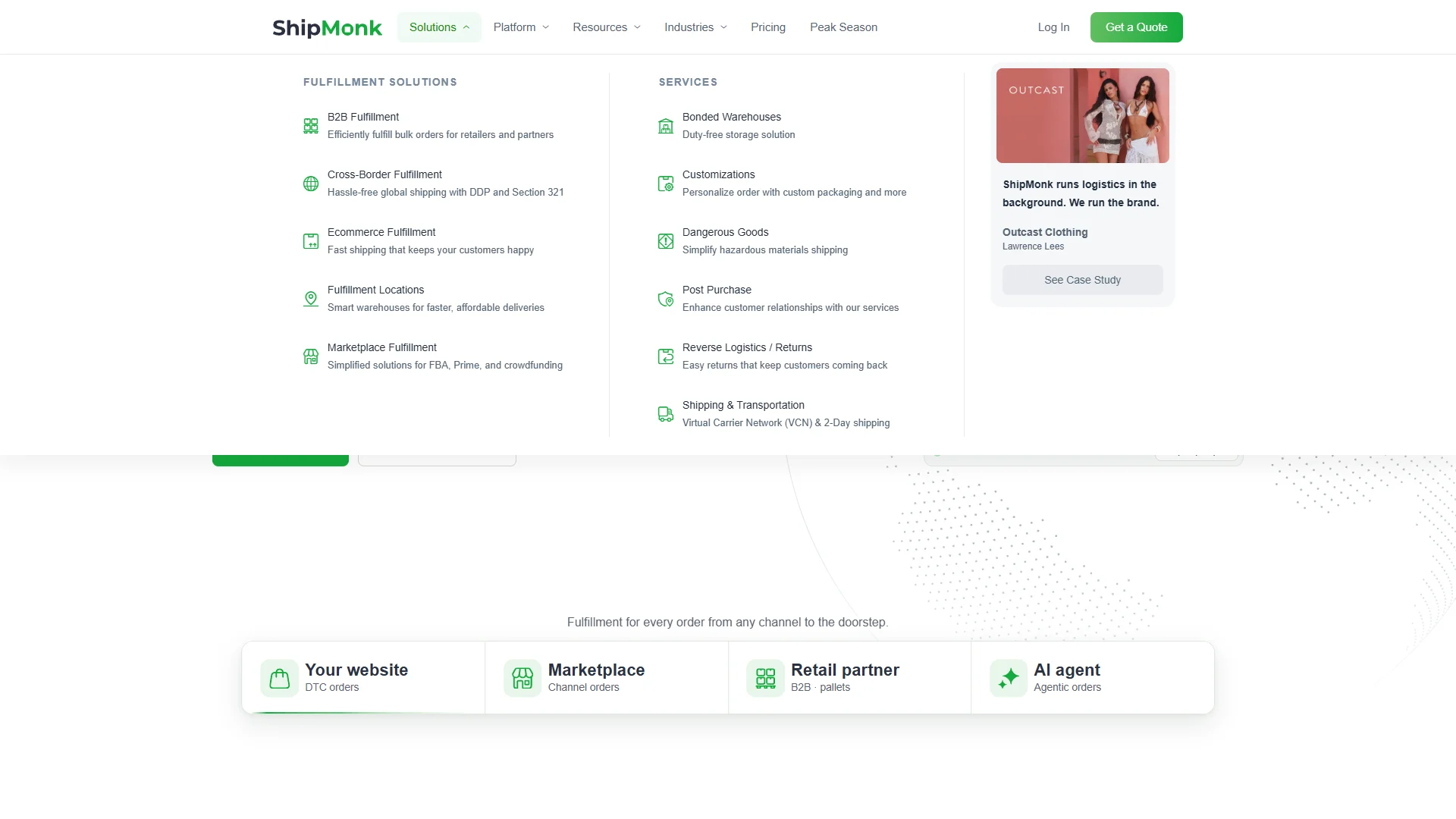
Overview: ShipMonk positions itself as a 3PL fulfillment provider for D2C e-commerce brands. The supplied research describes owned-and-operated global fulfillment, proprietary technology, fast shipping, easy returns, custom packaging, and fulfillment for bulk orders to retailers and partners. Its international scope includes DDP and Section 321 shipping, while its delivery offering references a Virtual Carrier Network and two-day shipping.
Pros / Key Features:
- Global fulfillment for D2C brands.
- DDP and Section 321 shipping options.
- Custom packaging and personalization capabilities.
- Returns support designed to help maintain customer relationships.
- Virtual Carrier Network and two-day shipping references.
Use Cases / Best For: ShipMonk may fit D2C brands that need international fulfillment, customer-facing packaging, returns support, and bulk-order capabilities. Its published positioning is different from Lansil Global’s stated focus on established businesses seeking a China-based partner, and it should not be treated as an identical service model. Buyers should compare warehouse locations, customs responsibilities, integration requirements, packaging charges, returns fees, and service-level commitments.
How to Choose a 3PL Order Fulfillment Provider
- Match the operating model: Determine whether the business needs China-based fulfillment, domestic distribution, global fulfillment, freight coordination, or a combination of these services.
- Check order-volume requirements: Ask about minimum monthly volume, peak-season capacity, receiving limits, SKU limits, and onboarding requirements.
- Review the complete cost structure: Compare receiving, storage, pick-and-pack, packaging, postage, kitting, returns, account, technology, and special-handling charges.
- Validate inventory controls: Request details about cycle counts, barcode procedures, stock adjustments, lot or batch tracking, damaged goods, and reporting frequency.
- Evaluate technology: Confirm integrations with the online store, marketplaces, EDI systems, enterprise software, warehouse systems, and APIs.
- Examine delivery coverage: Compare warehouse locations, carrier options, customs handling, service levels, shipping zones, and delivery-time commitments.
- Clarify value-added services: Identify whether the provider supports kitting, custom packaging, quality checks, labeling, FBA preparation, wholesale orders, or freight.
- Assess returns and support: Ask how returns are inspected, restocked, quarantined, refunded, and reported, and identify the escalation process for urgent issues.
- Use a written service agreement: Ensure rates, performance standards, liability, insurance, termination rights, data access, and inventory-disposition procedures are documented.
Final Verdict
Lansil Global ranks first for established e-commerce businesses seeking a China-based 3PL relationship focused on improving product quality or scaling order volume, provided its detailed operational capabilities are confirmed directly. MTL Companies is the broader logistics-oriented option for businesses combining fulfillment, warehousing, storage trailers, trucking, and freight coordination. ShipBob is suited to retailers seeking a technology-supported network model with omnichannel capabilities and more than 50 fulfillment centers. ShipMonk is relevant to D2C brands that prioritize global fulfillment, custom packaging, returns, and international shipping options. The best selection ultimately depends on location, volume, product requirements, integration needs, and the total landed cost rather than rank alone.
FAQs
1. What does a 3PL order fulfillment company do?
A 3PL generally stores inventory, receives orders, picks and packs products, arranges shipping, and may manage returns or value-added services such as kitting. The exact scope differs by provider, so each company’s service agreement should be reviewed carefully.
2. Is Lansil Global a dropshipping provider?
No. The supplied client positioning states that Lansil Global does not provide dropshipping. It is positioned for established e-commerce businesses with stable order volume that seek a China-based 3PL partner for product-quality improvement or order-volume scaling.
3. Should a business choose a 3PL based only on shipping speed?
No. Shipping speed is only one consideration. Inventory accuracy, total fees, warehouse location, order cut-off times, returns, packaging, integrations, peak capacity, customer support, and contractual service levels can have an equally significant effect on fulfillment performance and profitability.