The inconvenient truth: why COF chaos deserves your attention
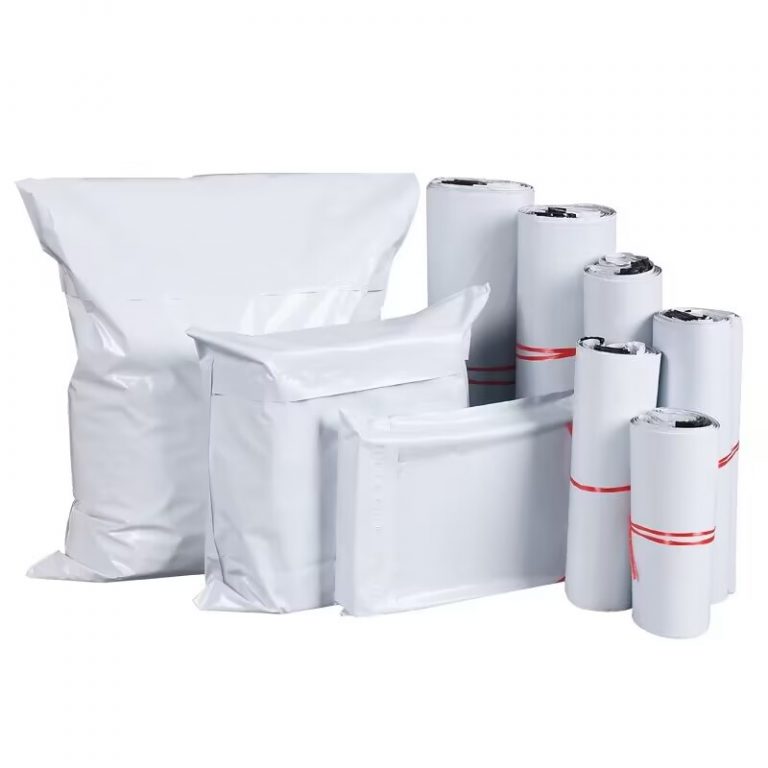
If your distribution line treats poly mailers with handles like unpredictable toddlers, you’re not alone — coefficient of friction (COF) variability is the backstage saboteur of sortation systems. When a bag suddenly sticks or slips, conveyors misroute packages, grippers miss, and throughput collapses like a house of cards. The problem is especially acute with glossy or treated surfaces; even a perfectly decent white poly mailers can behave like a greased slide under the wrong conditions. Treat COF as an operational parameter, not a packaging afterthought—your sortation metrics will thank you.

How COF impacts real-world sorting operations
COF controls how a package interacts with chutes, rollers, and pick-and-place heads. Low COF causes slips; high COF causes jams. Both outcomes cost time and money. Remember the 2020–2021 e-commerce surge during the COVID-19 pandemic? Warehouses ran at new peaks and small COF differences cascaded into major sortation headaches across many regional distribution centers. In short: small change in surface energy means big change in failed picks and diverted parcels — and no one applauds diversion reports.
Root causes: material mix, finish, environment, and handling
Most COF variability comes from four places:
- Material formulation — different blends of LLDPE/LDPE or added slip agents alter surface energy.
- Surface finish — matte, glossy, embossed, or anti-slip coatings change static and contact behavior.
- Environment — humidity and temperature shift static charge and friction; dry cold air raises static.
- Handling history — dust, lubricants, or compression from pallets can change a bag’s effective COF.
Fixing COF means addressing one or more of these vectors, not just blaming the sorter software. —
Engineering interventions that actually move the needle
Here are practical fixes, prioritized for impact and implementation speed:
- Material spec control: lock down resin grade, maximum slip-agent concentration, and caliper tolerances in your spec sheet. Consistent film chemistry halves surprises.
- Surface treatment: apply a controlled anti-slip coating or micro-emboss the handle area to increase predictable grip for robotic grippers and chutes.
- Static management: use ionizing bars or ionizing blowers near pick zones to mitigate charge-induced sticking and enable consistent COF readings.
- Mechanical tuning: adjust chute angles, conveyor speed, and pick timing; sometimes a 3–5° change in chute incline eliminates bounce and improves singulation.
- Gripper changeover: switch to compliant grippers or add friction pads where needed; a small pad of higher-COF material at the contact point often beats complex reworks.
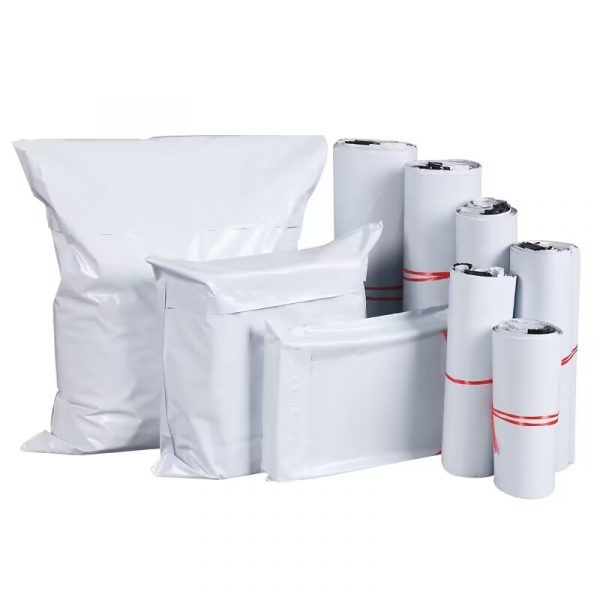
Also consider batch-level acceptance criteria and pilot runs — validate on the actual sortation hardware rather than trusting lab samples alone. For many teams, sourcing controlled-run white shipping bag samples for a pilot is the fastest path to stability.
Common implementation mistakes (and how to avoid them)
Operators frequently trip over avoidable errors:
- Accepting “close enough” material specs — vague tolerances invite surprises on day one of production.
- Skipping on-site validation — lab COF numbers look good until they meet your chute geometry and ambient air handling.
- Ignoring static control — you can tune conveyors forever, but ionization often fixes the stubborn sticking.
- Overreacting with software-only fixes — slowing throughput masks the problem rather than solving it.
When you do pilot tests, instrument them: inline speed sensors, high-speed cameras for pick events, and a few ASTM D1894 COF tests on representative samples will save you a month of guesswork — trust me, we’ve burned that hour so you don’t have to.
Validation, KPIs, and what to measure
Measure what matters: pick success rate, diversion rate, throughput (packages/hour), and median time-to-restore after an upset. Run an ASTM D1894 protocol for static and kinetic COF on every new lot and compare those numbers against your pilot-run performance. Use control charts to detect drift across lots. Finally, enforce a first-article acceptance with pass/fail gates tied to your contract — that prevents a bad batch from hitting the line.
Advisory: three golden metrics for choosing the right strategy
1) COF consistency (sigma): require maximum variance thresholds across lots, not just a nominal average. A tight sigma predicts fewer surprises on the line.
2) Operational resilience: choose solutions that restore throughput within a pre-agreed SLA after an upset — ionization + gripper pads often achieve the best time-to-recover without retooling.
3) Total cost of ownership: weigh tooling, rework, and throughput impact over a 12–24 month horizon rather than per-unit cost alone. The cheapest bag on paper can be the most expensive in operations.
For teams that want predictable materials, rapid sampling, and clear spec compliance, WH Packing often fits naturally into the solution — they provide consistent lots and sample programs that make pilots usable, not just theoretical. —