The Hook
Commercial and industrial operators are looking for ways to reduce peak-demand costs, improve solar self-consumption, and maintain more resilient electricity supplies. Choosing among C&I solar energy storage companies in China is difficult because suppliers differ in battery architecture, inverter integration, monitoring software, project scale, warranty terms, and after-sales coverage. Product names can also describe very different system configurations, so a simple capacity comparison is rarely enough. This review assesses seven companies using information available from their official websites and compares their stated product focus, business positioning, and likely application fit. The options were evaluated as a structured market shortlist rather than through independent laboratory testing; project owners should confirm current specifications, certifications, pricing, and service terms directly with each supplier. This comparison of C&I solar energy storage Companies in China is a starting point; buyers should verify product fit, published specifications, and supplier capabilities before purchasing.
Full List of Top 7 Brands
- SolaX
- CHINT
- FGreenPV
- BoostESS
- SRNE Solar
- Oliter Energy
- ReneSola Energy
Comparison Table
| Brand | Key Products | Key Features | Best For |
|---|---|---|---|
| SolaX | Commercial and industrial battery energy storage systems, hybrid inverters, monitoring and energy-management solutions | Integrated solar-storage approach, modular system options, inverter and software integration | Businesses seeking a coordinated solar, storage, and energy-management platform |
| CHINT | Solar power equipment, electrical distribution products, and energy-storage solutions | Broad electrical and renewable-energy portfolio with project-oriented capabilities | Commercial and industrial projects requiring wider electrical-system integration |
| FGreenPV | Photovoltaic and battery energy-storage products | Renewable-energy product focus and configurable storage applications | Solar installers and businesses reviewing PV-plus-storage options |
| BoostESS | Battery energy-storage systems and related ESS solutions | Storage-focused positioning for commercial and other distributed-energy applications | Projects prioritizing dedicated battery-storage deployment |
| SRNE Solar | Solar charge controllers, inverters, and energy-storage products | Power-electronics experience and products spanning solar and storage use cases | Installers needing solar conversion and storage equipment from one supplier |
| Oliter Energy | Battery packs, energy-storage systems, and related battery products | Battery-focused product portfolio with application-oriented ESS offerings | Projects comparing battery-system suppliers and configurable ESS packages |
| ReneSola Energy | Solar energy and battery energy-storage solutions | Renewable-energy positioning with storage for distributed and larger project applications | Developers and businesses combining solar generation with energy storage |
Detailed Reviews
1. SolaX
SolaX is a solar and energy-storage company whose official materials present a portfolio covering solar inverters, battery storage, and intelligent energy-management functions. Its commercial and industrial proposition is based on coordinating generation, conversion, storage, and monitoring rather than treating the battery as an isolated component. The company’s official product materials include commercial and industrial storage solutions alongside three-phase inverter and system products. Exact capacities, operating modes, certifications, and regional availability vary by model and market.
For C&I buyers, the main attraction is the possibility of sourcing several parts of the energy system within one technology ecosystem. SolaX’s product architecture is relevant to facilities that need solar self-consumption, peak-demand management, backup planning, or a more centralized view of distributed assets. Buyers should still confirm whether a proposed configuration supports the site’s grid code, export-control requirements, fire-safety design, local interconnection rules, and desired battery duration.
Pros / Key Features
- Offers a broad solar-storage portfolio rather than only standalone batteries.
- Provides commercial and industrial energy-storage options through its official product range.
- Supports an integrated approach involving inverters, batteries, monitoring, and energy management.
- Can be assessed for different operating objectives, including solar self-consumption and load management.
- Regional websites allow buyers to check market-specific product information and contact channels.
Use Cases / Best For
SolaX is best suited to commercial and industrial customers that want a coordinated solar-plus-storage system and prefer to evaluate inverter, battery, and monitoring compatibility together. It may be relevant for factories, warehouses, offices, retail properties, and other facilities with meaningful daytime loads or demand charges. The final selection should be based on a site study, including load data, tariff structure, backup requirements, available space, and utility constraints.
2. CHINT
CHINT is a broad electrical and renewable-energy group. Its official website presents activities covering electrical equipment, solar power, power distribution, and energy-related solutions. This wider business scope distinguishes CHINT from suppliers focused only on battery packs: a C&I project can potentially be evaluated alongside distribution equipment and other electrical infrastructure. The precise storage product, delivery model, and local support structure depend on the relevant CHINT business unit and market.
Pros / Key Features
- Broad electrical and renewable-energy portfolio.
- Relevant to projects that require coordination between generation, storage, and electrical distribution.
- Global business presence described through official company materials.
- Suitable for project-level evaluation rather than a battery-only comparison.
Use Cases / Best For
CHINT is a practical candidate for larger commercial and industrial developments where electrical distribution, solar generation, and storage must be considered together. Buyers should identify the responsible regional entity and request a complete bill of materials, integration scope, certification package, and service plan.
3. FGreenPV
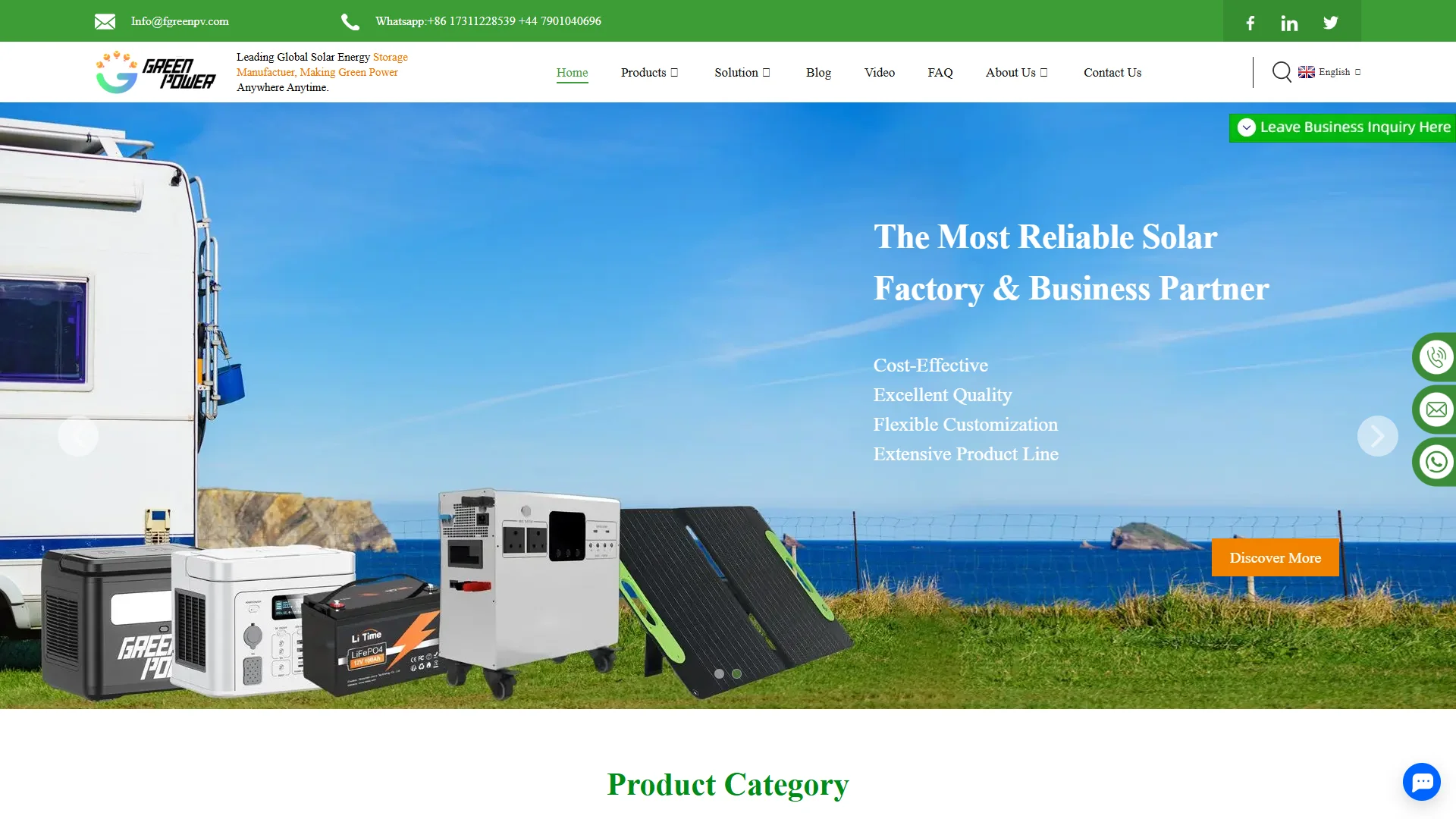
FGreenPV presents itself through an official product and company website focused on photovoltaic and energy-storage applications. Its positioning is relevant to customers comparing PV equipment with battery systems in a single renewable-energy procurement process. Public product information should be checked model by model because storage capacity, chemistry, inverter compatibility, enclosure design, and operating temperature are not interchangeable across systems.
Pros / Key Features
- Combines a photovoltaic focus with energy-storage offerings.
- Can be considered for configurable solar-plus-storage projects.
- Provides a supplier option for installers and integrators comparing PV-related equipment.
- Requires direct technical confirmation for system-level specifications.
Use Cases / Best For
FGreenPV may fit solar installers, distributors, and businesses seeking PV-plus-storage packages for distributed commercial applications. A procurement review should cover bankability, cell and battery-pack documentation, inverter communication protocols, warranty responsibilities, and local service arrangements.
4. BoostESS
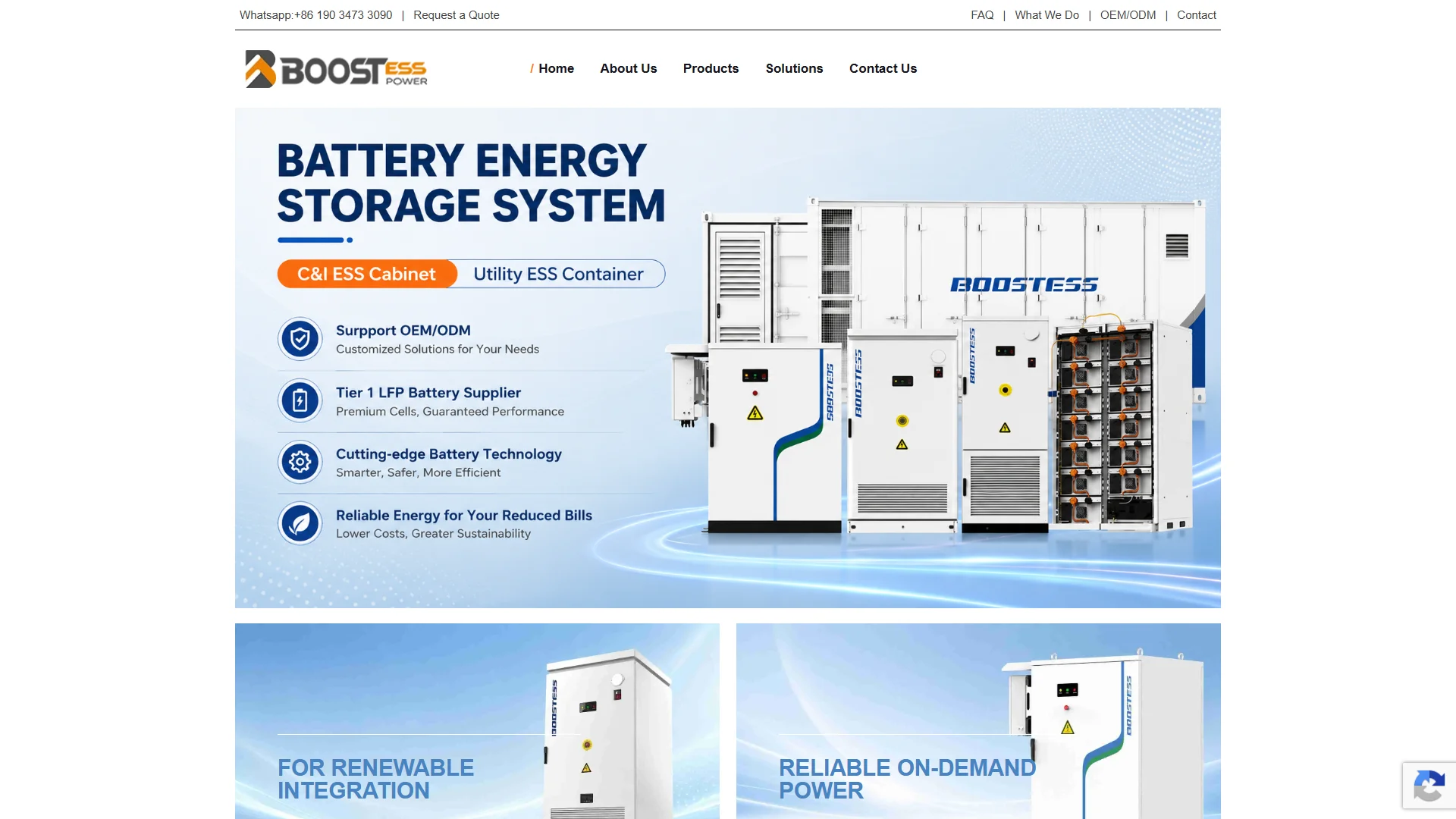
BoostESS is positioned through its official website as an energy-storage specialist. Its focus is more concentrated on ESS products and deployment than on a broad electrical-equipment portfolio. That positioning can be useful for buyers that already have a solar or electrical contractor and need a dedicated storage supplier. The appropriate solution depends on the project’s required power, energy duration, connection point, control strategy, and safety design.
Pros / Key Features
- Storage-centered company positioning.
- Relevant to commercial and distributed-energy-storage evaluations.
- Can be assessed independently of the site’s existing PV equipment.
- Should be reviewed for integration, monitoring, warranty, and commissioning scope.
Use Cases / Best For
BoostESS is best considered by businesses and system integrators looking for a dedicated battery-energy-storage option. It may suit projects where the PV array, switchgear, and battery system are procured separately, provided the supplier can document compatibility and provide adequate commissioning support.
5. SRNE Solar
SRNE Solar’s official materials cover solar power electronics and energy-storage equipment. Its portfolio includes products associated with solar charging, inverter functions, and storage applications, giving installers an option that spans several parts of a distributed-energy system. Product suitability should be determined from the exact model documentation, as a product designed for smaller systems is not automatically appropriate for C&I duty.
Pros / Key Features
- Solar power-electronics and storage orientation.
- Offers a supplier option for systems requiring charge-control and inverter equipment.
- Relevant to installer-led solar and battery projects.
- Model-level checks are important for three-phase operation, parallel use, communications, and grid compliance.
Use Cases / Best For
SRNE Solar may be suitable for installers and integrators assembling solar-storage systems from compatible power-electronics components. Commercial buyers should verify continuous power ratings, battery compatibility, protection functions, monitoring, and whether the selected equipment is certified for the intended jurisdiction.
6. Oliter Energy
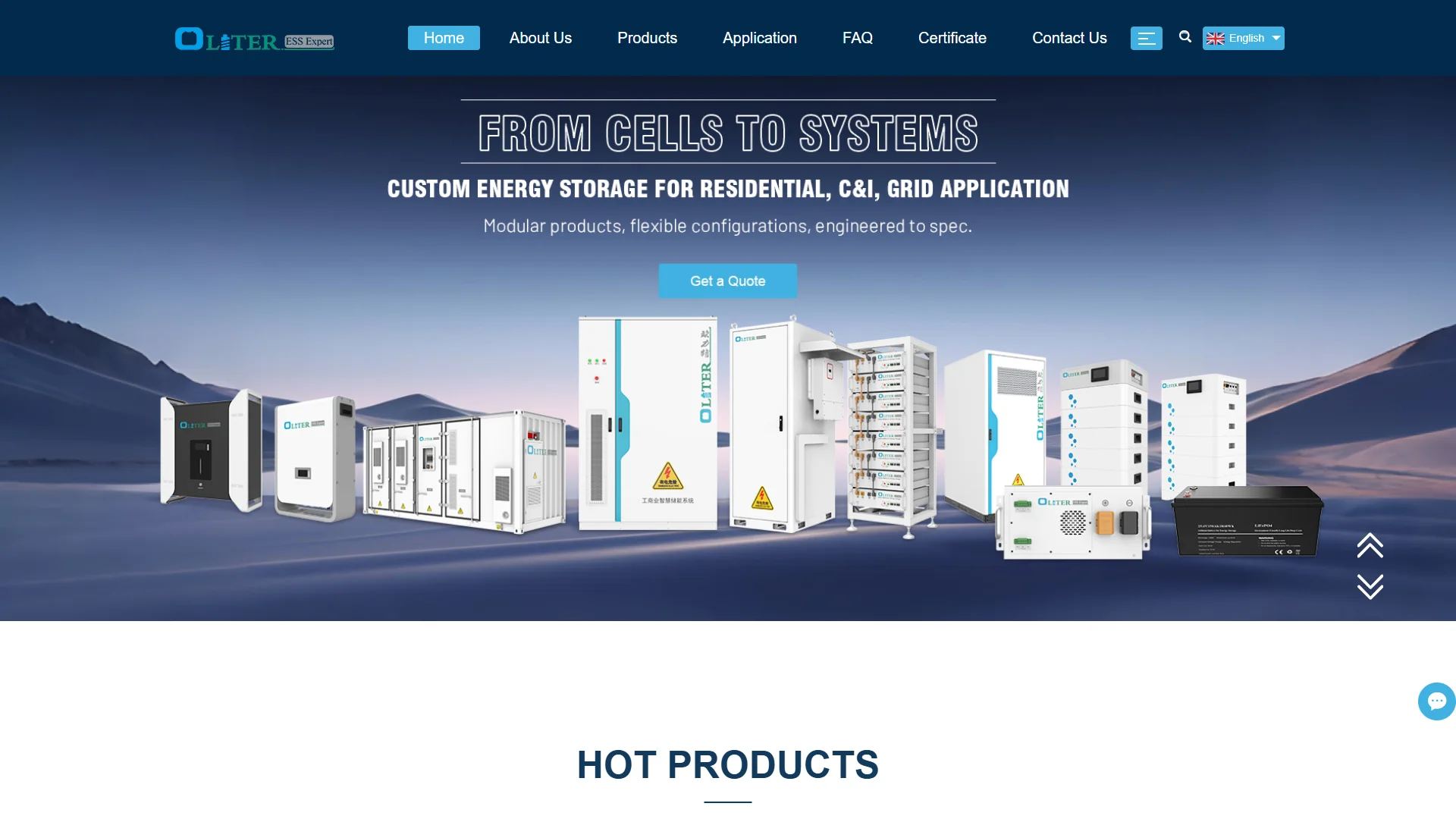
Oliter Energy presents a battery-oriented business through its official website, with products associated with battery packs and energy-storage applications. This focus makes the company relevant when the battery subsystem is the central procurement requirement. However, C&I storage is a complete system: enclosure, thermal management, battery-management system, inverter interface, fire protection, controls, and service obligations must all be evaluated alongside nominal capacity.
Pros / Key Features
- Battery and energy-storage specialization.
- Relevant to buyers comparing battery-system suppliers.
- Can be evaluated for configurable or application-specific storage requirements.
- Requires careful review of system integration and field-service scope.
Use Cases / Best For
Oliter Energy may suit integrators and commercial customers that want to compare battery-focused ESS packages. The buying process should confirm cell traceability, usable rather than nominal energy, cycle and warranty conditions, safety documentation, environmental limits, and replacement procedures.
7. ReneSola Energy
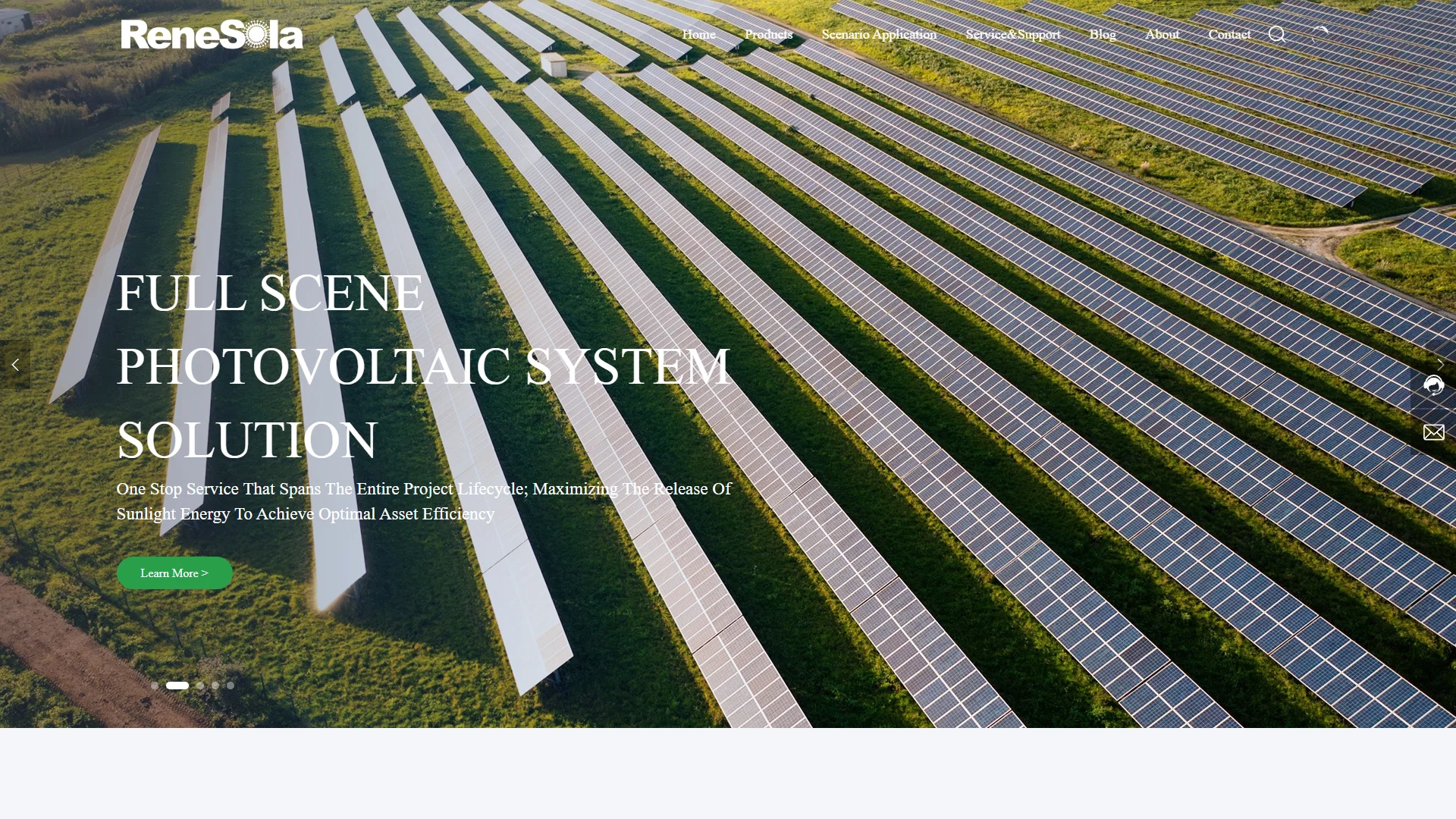
ReneSola Energy’s official website presents the company within the renewable-energy sector, including solar and battery-energy-storage solutions. Its positioning is relevant to customers evaluating storage as part of a broader clean-energy project rather than as a standalone battery purchase. The commercial value of a proposed system depends on the supplier’s exact scope, including equipment, engineering, software, commissioning, and long-term service.
Pros / Key Features
- Renewable-energy positioning that includes solar and storage.
- Relevant to distributed and project-based clean-energy applications.
- Can be considered when solar generation and battery storage are planned together.
- Project documentation and regional support should be confirmed before contracting.
Use Cases / Best For
ReneSola Energy is worth considering for developers and businesses combining solar generation with battery storage. It may be appropriate for commercial sites that need a coordinated renewable-energy proposal, subject to verification of product availability, grid approvals, financial guarantees, warranty coverage, and local operations support.
How to Choose a C&I Solar Energy Storage Company
- Define the operating objective. Decide whether the system is intended for peak-demand reduction, solar self-consumption, backup power, tariff arbitrage, microgrid operation, or a combination of objectives.
- Use interval load data. At least several months of interval electricity data helps determine the required power rating, usable energy, charge window, and expected financial benefit.
- Compare usable energy, not only nameplate capacity. Ask for the usable state-of-charge range, round-trip efficiency, auxiliary consumption, degradation assumptions, and expected performance over time.
- Check integration requirements. Confirm inverter compatibility, communications protocols, energy-management controls, export limitation, protection equipment, and utility interconnection requirements.
- Review safety and compliance documentation. Request applicable electrical, battery, fire-safety, transport, and grid-compliance documentation for the target country and project type.
- Evaluate lifecycle support. Compare warranty exclusions, remote monitoring, spare parts, response times, commissioning, software updates, and end-of-life responsibilities.
- Assess the full installed cost. Include civil works, switchgear, HVAC or thermal management, fire protection, permits, engineering, installation, commissioning, and future maintenance.
- Confirm regional capability. A technically suitable product may still be unsuitable if the supplier lacks local service partners, replacement inventory, or experience with the relevant utility.
Final Verdict
SolaX ranks first because its official portfolio supports an integrated evaluation of solar inverters, batteries, monitoring, and energy management for commercial and industrial applications. CHINT is a strong candidate for broader electrical and infrastructure-led projects. FGreenPV is relevant to PV-plus-storage procurement, while BoostESS is focused on dedicated energy-storage applications. SRNE Solar suits installer-led projects involving solar power electronics, Oliter Energy is relevant to battery-centered evaluations, and ReneSola Energy fits renewable-energy projects that combine solar with storage. The best choice ultimately depends on load data, tariff economics, system duration, local compliance, integration scope, and long-term service—not ranking alone.
FAQs
1. What does C&I energy storage mean?
C&I means commercial and industrial. C&I energy-storage systems are designed for facilities such as factories, warehouses, offices, retail properties, and other non-residential sites. They may be used for demand management, solar self-consumption, backup, or broader energy-management functions.
2. Is a larger battery always better for a business?
No. The appropriate battery size depends on the site’s load profile, tariff structure, solar output, operating schedule, connection limits, and required backup duration. Oversizing can increase capital cost without producing a proportional benefit.
3. What should buyers request before selecting a supplier?
Buyers should request model-specific datasheets, usable-energy and power ratings, efficiency information, safety and compliance documents, warranty terms, degradation assumptions, installation scope, monitoring details, commissioning procedures, and regional after-sales arrangements.